
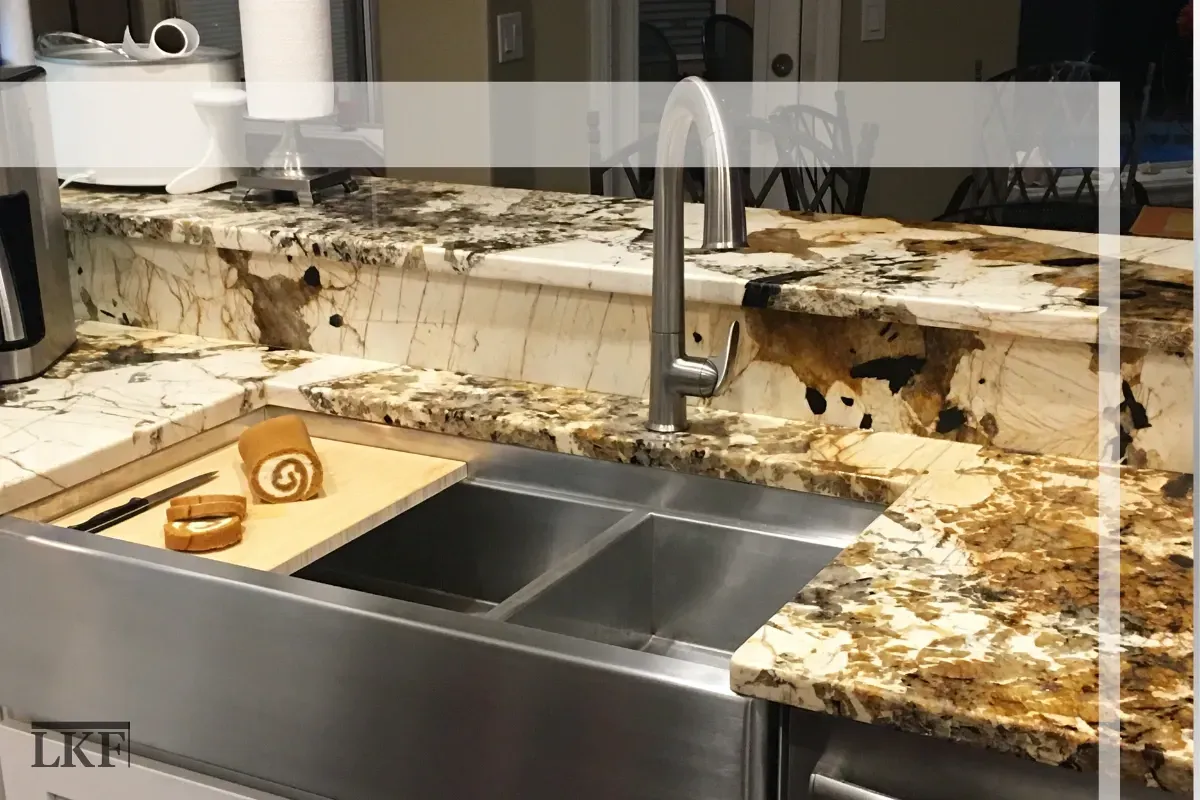
Is a 2 Bowl Sink Right for Your London Kitchen?
If you're fitting a new kitchen in London and can't decide between a single bowl or a 2 bowl sink, you're not alone. It's one of those choices that looks simple on the surface but can genuinely change how your kitchen works day to day. The short answer: a 2 bowl sink suits kitchens where cooking and washing up happen at the same time, especially in busy households. But the longer answer depends on your cabinet width, worktop material, and how you actually use your space.
Quick take: A 2 bowl sink gives you two separate basins, letting you wash, rinse, and prep at the same time. They come in equal (50/50) and offset (60/40 or 70/30) splits, plus low-divider versions for larger pans. The main trade-off is size: most models need at least an 800 mm base cabinet. If your kitchen fitting project can accommodate one, they're a genuinely practical upgrade for cooking-heavy London households.
Table of Contents
What Are 2 Bowl Sinks for Kitchens and Cooking?
Why 2 Bowl Sinks Are Popular in Modern Kitchens
Benefits of Using a 2 Bowl Sink for Cooking and Meal Prep
Common Ways to Use 2 Bowl Sinks While Cooking
Best Materials for 2 Bowl Kitchen Sinks
How to Choose the Right 2 Bowl Sink for Your Kitchen
What Are 2 Bowl Sinks for Kitchens and Cooking?
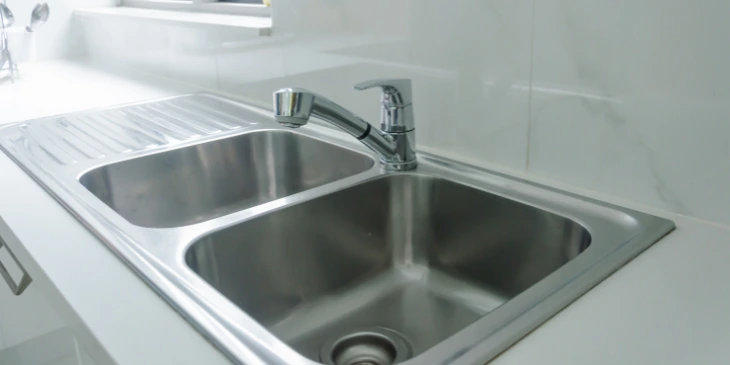
A 2 bowl sink is a kitchen sink with two separate basins set side by side, so you can run different tasks in each one at the same time. Rather than one large open bowl, you get two distinct zones within the same unit, which makes a real difference when you're mid-cook and need to rinse vegetables while a pan soaks in soapy water.
The category covers more than just the classic equal-split design. Bowl configurations typically come in three ratios: 50/50, 60/40, and 70/30. The equal split gives you two identically sized basins, while offset versions give you one dominant working bowl and a smaller secondary basin alongside it. There's also a third option worth knowing about: low-divider sinks, where the central wall sits roughly halfway up instead of running to the full height of the sink. That means you still get a double basin setup, but you can lay larger items like roasting tins or baking sheets flat across both sides when needed.
In the UK market, you'll find 2 bowl sinks listed by major retailers including Franke, Wickes, and Howdens, in both stainless steel and ceramic finishes, confirming this is a well-supported, practical choice for British kitchens rather than a niche import idea.
Why 2 Bowl Sinks Are Popular in Modern Kitchens
The double-basin layout has been the most common kitchen sink arrangement for decades, and that hasn't changed in modern kitchens, it's just evolved. Where earlier designs were almost always a fixed 50/50 split, today's range includes offset bowls, shallow-prep basins, and the low-divider format, giving households far more choice over how the sink works within their specific kitchen layout.
The appeal comes down to one thing: keeping different jobs separate without needing a second sink. In a north London terraced house or a south London flat with a galley kitchen, adding a dedicated prep sink simply isn't an option. A double basin solves that problem within a single footprint, which is exactly why kitchen fitting professionals across London recommend them so consistently for busy households.
What keeps the format relevant in modern kitchens is that it now comes in equal, offset, and low-divider versions instead of one fixed design. For anyone planning a kitchen fitting in London, that variety means there's almost always a 2 bowl configuration that suits the space. Multi-course meals, batch cooking, busy weeknight dinners where two people share the kitchen space: all of these benefit from a sink that can hold dirty utensils on one side while the other stays clear for rinsing or draining.
Benefits of Using a 2 Bowl Sink for Cooking and Meal Prep
The most obvious benefit is multitasking. Having two basins means you're not constantly emptying one side to start the next job. You can soak a pan in one bowl while rinsing salad leaves in the other. You can keep the prep side clean while the washing-up side handles dirty plates. That separation is small in theory but noticeably useful in practice, particularly in a kitchen fitting designed for regular cooking.
A second practical benefit is that double basin sinks suit households that still do a good amount of hand-washing. With one basin for soapy water and one for rinsing, the format covers the full wash-rinse-drain cycle without the contents of one bowl contaminating the other. It's a straightforward system that works.
The low-divider variant adds a specific advantage for anyone who regularly uses large cookware. Roasting tins, stockpots, and baking sheets that won't fit neatly into a standard bowl can sit across both basins when the divider is low enough to allow it, without you fully losing the two-zone split you rely on the rest of the time.
For families or anyone who hosts regularly, the format also means two people can use the sink at the same time without getting in each other's way, which is a small but genuinely welcome thing in a busy kitchen. If you're considering a west London or east London kitchen renovation and cook frequently, this alone can justify choosing a double basin over a single bowl.
Common Ways to Use 2 Bowl Sinks While Cooking
There are a handful of patterns that come up again and again in how people actually use a 2 bowl sink during cooking:
Rinse and soak at the same time. One basin holds dirty pans or utensils in soapy water while the other stays clean for rinsing produce, herbs, or cooked pasta. This is the most common split and the one most households settle into naturally.
Prep on one side, wash-up on the other. During a meal prep session, one bowl becomes the washing station for raw vegetables and fruit, while the other collects used boards, knives, and bowls as you go. It keeps the prep zone clear and the mess contained.
Drain on one side while working on the other. After boiling pasta or vegetables, you can drain directly into one basin (using a colander) and keep the other free for ongoing prep. No waiting, no shuffling items around the worktop.
Large-item handling with a low-divider sink. If your 2 bowl sink has a low central wall, roasting tins and baking sheets can span both basins for rinsing, which is a practical solution for households that cook large cuts of meat or do regular batch baking.
Whether you're fitting a Howdens, Wren, IKEA, or B&Q kitchen, the sink pairing should match how your kitchen is actually used. These real-world patterns are worth thinking through before settling on a configuration.
Best Materials for 2 Bowl Kitchen Sinks
There's no single best material for a 2 bowl sink; the right choice depends on your kitchen's style, how hard you use the sink, and what kind of maintenance you're willing to do. That said, three material categories cover the vast majority of what's available in the UK market.
Howdens confirms that stainless steel is the easiest material to maintain day to day, generally needing only soap and warm water. Composite and ceramic are better positioned as style-and-performance alternatives rather than simpler-care options. Either way, the material you choose should complement your worktop. It's a detail worth raising early in any kitchen fitting conversation, so the sink, worktop, and cabinet choices all align from the start.
How to Choose the Right 2 Bowl Sink for Your Kitchen
Choosing a 2 bowl sink comes down to three practical decisions: bowl configuration, cabinet fit, and installation method.
Bowl configuration. Start with how you actually use your sink. If you want two genuinely equal wash-and-rinse zones, a 50/50 split is the most direct choice. If you'd rather have one main working bowl with a secondary basin for overflow or veg prep, a 60/40 or 70/30 layout gives you that without losing the double-basin benefit. If you regularly cook with large trays or stockpots, a low-divider version keeps both zones accessible while improving clearance across the middle.
Cabinet fit. This is the one that catches people out. Most 2 bowl sinks need at least an 800 mm base cabinet. Franke UK's Maris two-bowl stainless model specifies a minimum 80 cm cabinet, and Wickes lists the same requirement for its stainless two-bowl range. The Wickes Rangemaster farmhouse ceramic two-bowl model requires an even wider 900 mm cabinet. If your base units are narrower than 800 mm, a true double bowl may not be a straightforward fit, and a 1.5 bowl sink might be the more practical choice. It's worth confirming your cabinet dimensions before you commit.
Installation method. The two main options are inset (drop-in) and undermount. Inset sinks sit into a cut-out in the worktop with a visible rim and are compatible with almost any worktop surface, including laminate. Undermount sinks fix beneath the worktop for a seamless look but need a solid, non-porous surface like granite or stone to support them properly. Laminate worktops are best suited to inset fitting. If you're unsure which method suits your worktop, it's worth speaking to a kitchen fitting specialist before you purchase. The vetted team connected by us, can advise on this as part of any kitchen project.
Final Thoughts on 2 Bowl Sinks for Kitchens and Cooking
A 2 bowl sink isn't for every London kitchen, but for the right household it's one of the more practical upgrades you can make. If you genuinely cook regularly, share your kitchen with a partner or family, or just find yourself constantly shuffling things around a single basin, the double basin format solves a real problem.
The most defensible position, backed by UK retailers and kitchen fitting specialists alike, is this: a 2 bowl sink works best for households that genuinely want separate prep and wash-up zones and have the cabinet width to support one. Howdens sums it up well, calling double-bowl sinks ideal for big families and "budding chefs," while Wren highlights their value when catering for large groups.
If your base cabinets are narrower than 800 mm, a 1.5 bowl sink is likely the better fit. It still gives you a secondary basin for rinsing or veg prep without the full footprint of a double bowl. But if the space is there, a 2 bowl sink is a genuinely useful addition to any kitchen built for real cooking.
Ready to plan your kitchen? Get in touch with our vetted team through London Kitchen Fitting.
2 Bowl Sinks for Kitchens and Cooking FAQs
Are 2 bowl sinks the same as 1.5 bowl sinks?
No. A 1.5 bowl sink has one full-sized main bowl plus a smaller secondary bowl, while a true 2 bowl sink gives you two full basins. Howdens notes that the 1.5 bowl layout is useful when you want a rinse or veg-washing area without the full footprint of a double basin. It's a question that comes up regularly in kitchen fitting consultations, and Wren confirms the extra half bowl adds only minimal space while still helping with rinsing and prep.
Will a 2 bowl sink fit a standard UK cabinet?
It depends on the model. Franke UK's Maris 2 bowl stainless sink requires a minimum 80 cm cabinet. Wickes lists the same specification. The Rangemaster farmhouse two-bowl ceramic sink from Wickes needs a wider 900 mm cabinet. Always confirm the minimum cabinet width before purchasing.
Can a 2 bowl sink be undermounted as well as inset?
Yes, some can, but your worktop material matters. Wickes confirms the Franke Maris 2 bowl sink can be installed either way. Howdens says non-porous solid surfaces suit undermount designs, while laminate is best suited to inset installation. Wren adds that undermount sinks need a solid surface like granite or stone to support them properly.
Which material is easiest to maintain?
Stainless steel. Howdens says it generally needs only soap and warm water to keep clean. Composite sinks are scratch-, stain-, and heat-resistant, and ceramic is non-porous and hygienic, but both are better framed as style-and-performance alternatives rather than lower-maintenance options compared to steel.
Are ceramic 2 bowl sinks practical for heavy cooking?
Yes, if you have the cabinet space. Wickes describes its Rangemaster farmhouse two-bowl ceramic sink as well-suited to large trays and pans, and lists it as heat-, stain-, rust-, and scratch-resistant. BLANCO UK confirms ceramic can handle hot cookware up to 280°C, making it a strong choice for cooking-heavy households.
When should you choose a 1.5 bowl sink instead?
In a smaller London kitchen where cabinet width is limited, a 1.5 bowl is often the practical compromise. It still adds a secondary basin for rinsing and prep without requiring the 800 mm minimum width of a full double bowl. If space is tight, it's worth speaking to a kitchen fitting specialist before committing to either option.