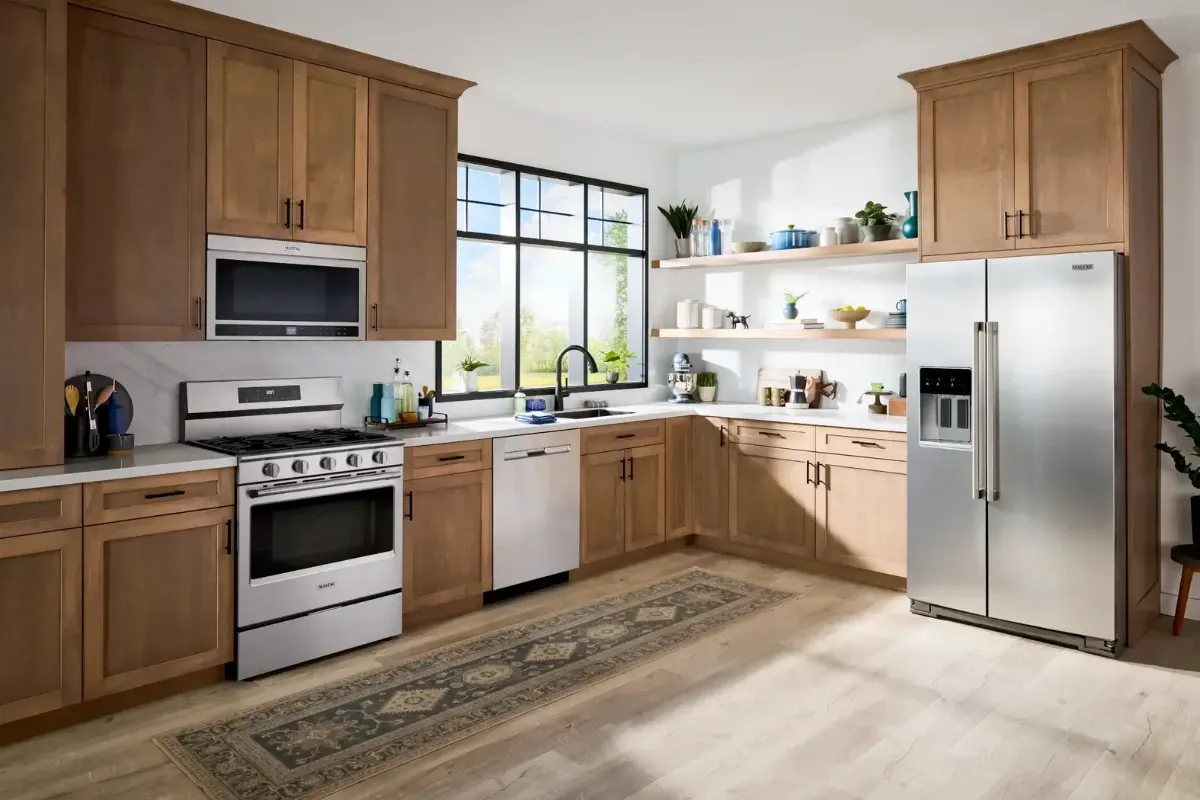
How Freestanding Kitchen Appliances Suit London Homes
You have just bought a Victorian terrace in North London, and the kitchen's original layout doesn't work for modern life. Or perhaps you're renting a flat in South London and want to upgrade your appliances without making permanent changes. This is where freestanding kitchen appliances come into their own.
Quick Take: Freestanding kitchen appliances are standalone units that can be placed anywhere with appropriate utility connections, without permanent installation into cabinetry. They're typically more affordable than built-ins (often thousands of pounds less), offer complete flexibility for future changes, and suit London's mix of period properties, rental flats, and modern homes.
Table of Contents
What Are Free Standing Kitchen Appliances?
Which Kitchen Appliances Are Typically Free Standing?
Pros of Free Standing Kitchen Appliances
Cons of Free Standing Kitchen Appliances
Design & Layout Tips: How to Make Free Standing Appliances Look Intentional
Practical Considerations: Sizing, Ventilation, Installation, and Maintenance
What Are Free Standing Kitchen Appliances?
Freestanding kitchen appliances are standalone units that aren't permanently built into cabinetry or walls. You can simply slide them into place and plug them in wherever appropriate utility connections are available. Unlike built-in appliances, which are custom-fitted to your cabinets for a seamless look, freestanding models have finished sides and backs, allowing them to stand independently.
This design gives you flexibility to move or rearrange freestanding kitchen appliances as needed. In London homes, particularly older properties where layouts can be quirky and dimensions non-standard, this flexibility proves invaluable.
Which Kitchen Appliances Are Typically Free Standing?
Most major kitchen appliances come in free-standing versions. The majority of household fridges are freestanding units that slide into an alcove or sit against a wall, with finished sides and tops requiring no cabinet housing. Free-standing refrigerators come in various widths, often 30-36 inches, and tend to be deeper than standard counters. In London's compact kitchens, this depth is worth considering.
Traditional all-in-one ranges combine ovens and cooktops as freestanding kitchen appliances. These can be placed between cabinets or anywhere there's a gas or electrical hook-up. With finished sides and a backguard, they stand alone without requiring cabinetry on each side. They're the most common type you'll see when fitting kitchens across London.
Many dishwashers fit under counters with visible front faces, making them freestanding under-counter appliances. Unless specifically made as integrated models, they aren't attached to cabinets with a door panel. Countertop microwaves, by definition, are also freestanding kitchen appliances.
These units can be put in place and later removed without altering cabinets. This flexibility is especially valuable when working with brands like Howdens, Wren, IKEA, or B&Q where standardisation is key.
Pros of Free Standing Kitchen Appliances
Freestanding kitchen appliances offer several clear advantages. They're significantly more affordable than built-in versions, both in upfront cost and installation expense. A free-standing range or fridge is usually much cheaper than a comparably sized built-in. In London, where kitchen fitting budgets can quickly escalate, this can save you thousands of pounds.
Installation is straightforward. You typically slide the unit into place and hook up the utilities, without needing custom cabinet work. This means you can move or rearrange freestanding kitchen appliances without major renovations. For London renters or homeowners who might want to reconfigure their space as needs change, this flexibility is invaluable.
These appliances come in a wide range of sizes, styles, and finishes to suit different kitchens. Whether you have a compact apartment or a spacious kitchen, there's likely a model that fits. You can find them in various colours and designs without being locked into a single manufacturer's cabinet panel style.
Since they have finished exteriors, no custom cabinetry or enclosures are required. This saves on the cost and time of carpentry. Servicing or replacing freestanding kitchen appliances is also straightforward because they're not permanently built in. A repair technician can usually pull the unit out easily, reducing long-term maintenance hassles for busy London households.
Cons of Free Standing Kitchen Appliances
While popular, freestanding kitchen appliances have some downsides compared to built-in units. One main drawback is aesthetics. Because they stand on their own, they don't always sit flush with cabinetry, which can interrupt the visual flow. Gaps may be visible around a freestanding fridge or range, and they generally protrude past cabinet fronts. You cannot add custom cabinet panels to most freestanding kitchen appliances, so they'll always display their factory finish rather than blending in.
If you buy different freestanding kitchen appliances separately, you might end up with mismatched handles or finishes. Mixing brands can lead to a less cohesive look. Many people address this by purchasing appliance sets from the same series.
These units usually need small gaps around them for ventilation and movement. These necessary gaps can be seen and may collect dust. Because they're not built in, dirt and grime can accumulate in the gaps or on exposed surfaces. Crumbs can fall between a freestanding range and adjacent cabinets, or dust can collect on top of a fridge. You may need to clean around and behind freestanding kitchen appliances more frequently than built-ins.
In some categories, these appliances may offer slightly less usable capacity than comparable built-ins. This can matter in compact London kitchens where storage is already at a premium. They might also be seen as less premium than fully integrated appliances in high-end or custom kitchens, though many freestanding professional-style ranges are themselves very high-end.
Design & Layout Tips: How to Make Free Standing Appliances Look Intentional
Thoughtful design ensures freestanding kitchen appliances still look intentional and stylish. Plan your cabinets and counters to frame them so they appear integrated. For example, recess a refrigerator a few inches into a wall or add pantry cabinets on each side and a cabinet above it. By surrounding a freestanding fridge with cabinetry panels and overhead enclosures, it will look more built-in.
For freestanding ranges, use trim pieces to close small gaps. Many slide-in ranges come with trim to overlap the counter, creating a built-in look. For microwaves or other countertop appliances, consider trim kits that give a streamlined appearance without custom installation.
Match finishes and design details. Purchasing a suite from the same brand or series ensures handles, knobs, and colours are consistent across the fridge, range, and dishwasher. Even if they aren't tucked behind cabinets, having the same stainless steel tone or handle style ties the kitchen together.
Always design your layout so freestanding kitchen appliances are flanked by cabinetry or counter space where possible. This is both functional and visual. A freestanding range should have base cabinets on both sides if possible, which "anchors" it in the design.
Alternatively, celebrate them as design features. Many freestanding kitchen appliances come in stylish designs or colours that can become a focal point. A vintage-style free-standing range in a bright colour, or a sleek professional stainless steel range, can add real character. This is something our team has mastered over years working across the capital.

Practical Considerations: Sizing, Ventilation, Installation, and Maintenance
When opting for freestanding kitchen appliances, keep several practical considerations in mind. Always measure your space and appliance dimensions carefully. Refrigerators can be much deeper than standard cabinets. A typical base cabinet is around 24 inches deep, but freestanding fridges may be 30 inches or more, causing them to stick out. In London homes, especially older properties, you might be dealing with non-standard measurements. Victorian or Edwardian kitchens often have quirky dimensions.
Freestanding kitchen appliances need proper airflow and clearances. Refrigerators especially require space for heat dissipation. Generally, leave about 1/8 inch to 1 inch on each side of a fridge, 1 inch on top, and 2 inches in back for adequate ventilation. Without these gaps, the appliance may overwork or overheat.
Installation is straightforward: slide the unit in and connect it. Ensure there are appropriate outlets, water lines, or gas lines where the appliance will go. Check that doorways and pathways are large enough. In London terraces or mansion block flats, narrow hallways and tight stairwells can be challenging. If you're working with a Gas Safe registered fitter for any gas appliances, they'll handle connections safely and in compliance with Building Regulations. Whether you're working with kitchen installations in East London or West London, proper planning makes all the difference.
Freestanding kitchen appliances are generally easier to service because you can pull them out if needed. Leave enough slack in the power cord or water line to pull the unit out for cleaning. Consider using anti-tip devices for free-standing stoves for safety. With basic upkeep like cleaning refrigerator condenser coils annually, freestanding kitchen appliances can last as long as built-ins and are simpler to swap out when needed.
Final Thoughts on Free Standing Kitchen Appliances
Freestanding kitchen appliances strike a balance between convenience, cost, and flexibility. They remain the standard choice in many kitchens for good reason: you can achieve a fully functional, stylish kitchen without the extra expense and effort of custom-built installations.
The choice comes down to clear trade-offs. Freestanding kitchen appliances offer great value and adaptability. You can take them with you when you move (important in London's transient rental market), or easily upgrade one piece at a time. Built-ins offer that seamless look and a high-end custom feel, but at significantly higher cost.
If you highly value a unified, upscale aesthetic and have the budget for a major kitchen remodel, you might lean toward built-in appliances in key spots. However, if affordability and flexibility are top priorities, freestanding kitchen appliances are likely the better choice. Many homeowners mix the two approaches for the best of both worlds.
A well-designed kitchen with modern freestanding kitchen appliances can still look intentional and beautiful. By selecting matching finishes and positioning appliances thoughtfully, you can mitigate most visual drawbacks. In real estate terms, built-in appliances can be a selling point in luxury homes. But in most cases, good-quality freestanding kitchen appliances are perfectly acceptable and expected. They won't inherently hurt resale value, and they keep your options open for future changes.
Whether you're remodelling or just replacing an old appliance, the pros and cons we've covered should help you make an informed decision. And if you need guidance on what works best for your specific London property, get in touch.

Free Standing Kitchen Appliances FAQs
What's the difference between a free-standing appliance and a built-in appliance?
The key difference is how they're installed. A freestanding appliance is a self-contained unit with finished sides that stands on its own and slides into place without needing cabinetry enclosures. A built-in appliance is designed to be integrated into kitchen cabinetry or walls, providing a flush, seamless appearance with permanent installation.
Are free-standing kitchen appliances generally cheaper than built-in ones?
Yes. Freestanding kitchen appliances are usually more affordable than their built-in counterparts. A freestanding refrigerator can be thousands of pounds cheaper than a comparably sized built-in fridge. Installation is also cheaper since you can often install freestanding units yourself or with minimal labour, whereas built-ins may require cabinet modifications and professional installers.
Can I install free-standing kitchen appliances myself, or do I need a professional?
Freestanding kitchen appliances are designed for relatively easy installation. In many cases, you can install them yourself if comfortable with basic connections. However, if it's a gas range or cooktop, you must have a Gas Safe registered professional connect the gas line for safety and legal compliance. For a free-standing range, install the anti-tip bracket to prevent tipping.
How can I make a free-standing refrigerator or stove look built-in?
Recess the fridge a few inches into the wall behind it, or create a cabinet enclosure that's deeper than standard cabinets, so the fridge door sits nearly flush with counters. You can also install panels on each side that match your kitchen cabinets, essentially boxing in the fridge. For a stove, use a slide-in range that slips between cabinets, ensuring there are cabinets and countertops directly on both sides. Use trim kits for appliances like microwaves to mount them in cabinet openings.
Do I need to leave space around free-standing appliances for ventilation?
Yes. For refrigerators, leave about 0.5 to 1 inch on each side, 1 inch on top, and 1-2 inches behind the fridge for adequate air circulation. This space allows heat from the condenser coils to dissipate. For ranges near a side wall, you typically need a few inches clearance above counter height for fire safety, especially for gas ranges. Always consult the installation manual for your specific appliance. Don't tightly box in freestanding kitchen appliances unless designed for zero-clearance.
