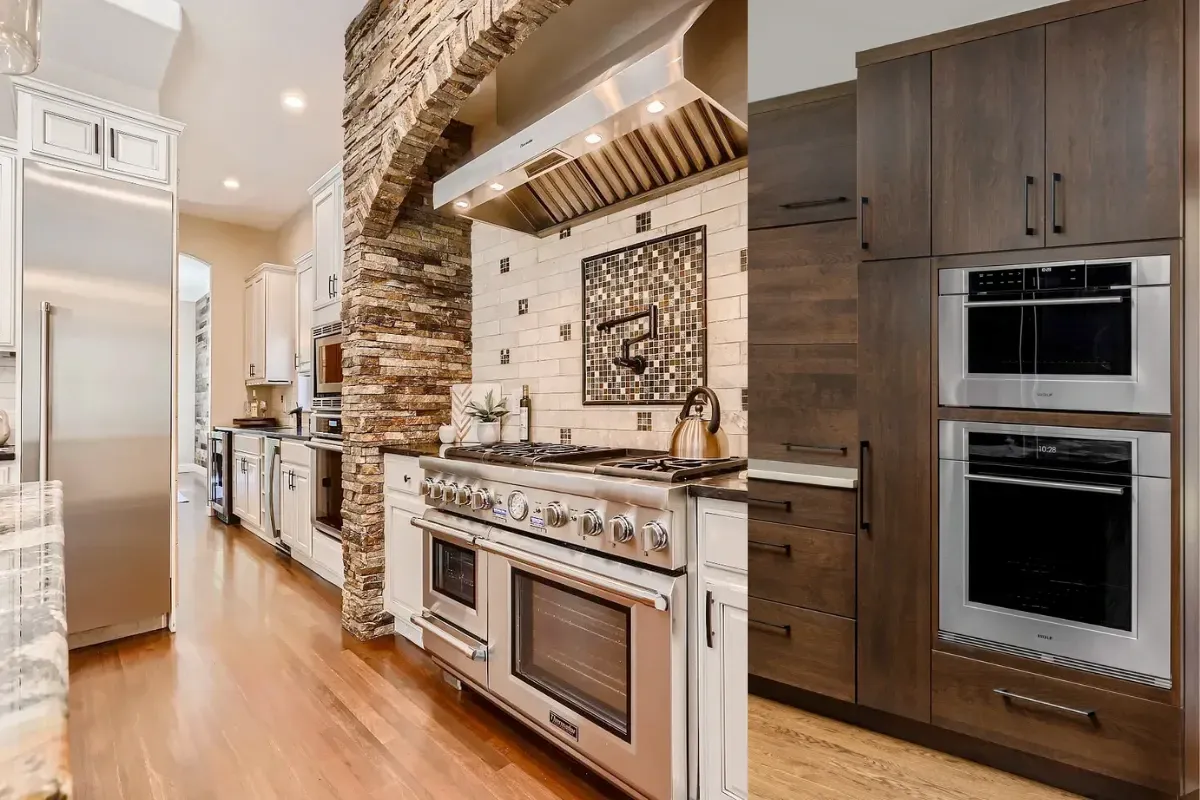
Freestanding vs Integrated Kitchen Appliances in London
You're planning a kitchen refresh, and suddenly it hits you: do you want your dishwasher to blend in or stand out? The choice between freestanding and integrated appliances shapes how your kitchen works, what it costs, and whether it'll still feel right in five years' time.
Quick take: Freestanding appliances are standalone units that cost less and offer more choice. Integrated appliances hide behind cabinet doors for a seamless look, but they're pricier and trickier to install. Your best choice depends on your budget, how long you're staying, and whether you value flexibility or polish.
Table of Contents
Freestanding vs Integrated Kitchen Appliances: What's the Difference?
Which Appliances Are Usually Freestanding, and Which Can Be Integrated?
The Real-World Pros and Cons of Freestanding Appliances
The Real-World Pros and Cons of Integrated Appliances
Cost, Value, and "What You're Really Paying For"
Design + Practical Fit: Sizing, Ventilation, Door Clearance, and Maintenance
Final Thoughts on "Freestanding vs Integrated Kitchen Appliances"
Freestanding vs Integrated Kitchen Appliances: What's the Difference?
Freestanding appliances stand on their own. Your fridge sits next to your counter. Your cooker slots into a gap. They're finished on all sides, so they look complete even when they're out in the open.
Integrated appliances hide behind cabinet doors or panels, creating a continuous run of cabinetry. Open what looks like a cupboard and there's your fridge. The dishwasher front matches your drawer fronts.
The difference isn't just visual. Integrated appliances need precise fitting, cabinet panels, and sometimes custom housing. Freestanding ones? You plug them in, level the feet, and you're done. In a Victorian terrace or new build flat, that installation difference can mean an extra day of work.
Which Appliances Are Usually Freestanding, and Which Can Be Integrated?
Not every appliance gets a choice. Some are almost always freestanding. Others can go either way. Here's how it breaks down in most London kitchens.
Nearly always freestanding:
Range cookers: These statement pieces are meant to be seen. Trying to hide a 90cm range defeats the point.
American-style fridge-freezers: Too big, too bold, and frankly, too much of a feature to tuck away.
Washing machines and tumble dryers: Unless you're building a utility room or hiding them in a tall housing unit, they're usually standalone.
Commonly integrated:
Standard dishwashers: The most popular choice for integrated appliances in London homes. They sit under your counter with a cabinet door fixed to the front.
Built-under or built-in ovens: These slot into housing units at eye level or under the hob, giving you a clean, streamlined look.
Fridge-freezers (standard size): Especially in modern Howdens or Wren kitchens, where the seamless finish is part of the appeal.
Can go either way:
Hobs: Freestanding cookers have them built in, but you can also get standalone hobs that drop into your worktop.
Microwaves: Freestanding on the counter, built into a wall unit, or sitting on a shelf. Your call.
Wine coolers and compact fridges: Often integrated into runs of cabinetry, but plenty of freestanding options exist.
In smaller London flats, especially conversions in places like Hackney or Wandsworth, you'll often find a mix. A freestanding cooker because it's cheaper and easier to replace, but an integrated dishwasher because it saves visual space. There's no rule saying you have to pick one approach across the board.

The Real-World Pros and Cons of Freestanding Appliances
Let's talk about what freestanding actually gives you, beyond the obvious "you can see it" factor.
The upsides:
Lower cost. This is the big one. Freestanding appliances cost less to buy and less to install. You're not paying for custom panels, extra cabinetry, or the labour to fit everything precisely. For a kitchen in North London on a sensible budget, that difference frees up money for better worktops or storage.
More choice. Walk into any appliance shop and the freestanding section dwarfs the integrated one. More brands, finishes, sizes, and features to pick from. Want a specific fridge brand? It's probably available freestanding.
Easy to replace. When your fridge gives up, you unplug it, wheel it out, and wheel a new one in. No fitter needed, no worrying about cabinet cutouts. For renters or people who move often, that flexibility matters. If you're working with a straightforward IKEA or B&Q kitchen, freestanding keeps things simple.
Simpler installation. Freestanding appliances don't need bespoke housing or panel matching. They're plug-and-play, which means faster fitting times.
The downsides:
Visual clutter. A freestanding fridge here, a cooker there, a dishwasher in white while your cabinets are grey. It can look bitty, especially in open-plan spaces where the kitchen's on show.
Less cohesive design. If you're going for that sleek, modern aesthetic where everything flows, freestanding appliances can break the line.
Harder to clean around. Freestanding appliances have gaps on the sides and back where crumbs and dust collect. You'll need to pull them out periodically to clean properly.
Takes up more visual space. Even if the footprint's the same, a freestanding appliance feels bigger because it's a separate object. In a compact East London kitchen, that can make the room feel cramped.
The Real-World Pros and Cons of Integrated Appliances
Now let's flip it. Integrated appliances promise that seamless, magazine-worthy look. But what does that actually mean day to day?
The upsides:
Streamlined appearance. This is what you're paying for. Everything matches. The kitchen feels like one unified piece of design rather than a collection of appliances and cabinets. For open-plan London homes where the kitchen's visible from the living room, that visual calm matters.
Better use of space. Integrated appliances are built to standard cabinet dimensions, so they slot neatly into runs without awkward gaps. In a galley kitchen in a South London flat, that precision helps maximise every inch.
Higher perceived value. If you're selling, integrated appliances add polish. They signal a properly planned kitchen, not something thrown together. Estate agents love them.
Quieter operation. Many integrated dishwashers run quieter because the cabinet acts as extra sound insulation. In a small flat, that's worth something.
The downsides:
Higher cost. Integrated appliances cost more to buy. Then you're paying for the cabinet panels to match. Then there's the fitting labour, which takes longer because everything has to line up perfectly. Budget an extra 30-50% compared to freestanding, sometimes more.
Less choice. The integrated appliance market is smaller. Fewer brands, models, and configurations available. If you want something specific, you might not find it integrated.
Harder to replace. When an integrated appliance breaks, you can't just swap it out. The new appliance needs to fit the same housing and match the door dimensions. If the model's discontinued, you might be looking at reconfiguring the cabinet run.
Longer installation time. Integrated appliances need precision: measurements, adjustments, panel cutting, hinge alignment. It's skilled work that takes time. Fine for a full refit, but frustrating if you're just replacing one appliance.
Ventilation challenges. Appliances need airflow. Integrated ones are boxed in, so you need proper ventilation gaps built into the housing. Get it wrong and you're shortening the appliance's lifespan or risking overheating.
Cost, Value, and "What You're Really Paying For"
Let's talk numbers, because this is where the freestanding vs integrated decision often gets made.
For a typical London kitchen, here's the rough breakdown:
Those are London prices, where labour costs more and space is tighter. In a West London refurb, that premium for integrated can add up fast. For a full set of appliances, you might be looking at £1,500-£2,000 extra to go integrated.
What you're paying for: time, cohesion, and aesthetic value. Integrated appliances take longer to install because the work's more detailed. You're also paying for a unified kitchen, which matters if you're staying long-term or selling soon.
The flip side? Freestanding appliances are easier to replace. You can upgrade one piece at a time without disrupting the whole kitchen. That flexibility has its own worth, especially if you're not sure how long you'll stay.
One more cost factor: repairs. Freestanding appliances are easier and cheaper to fix. The engineer pulls them out, works on them, puts them back. With integrated ones, sometimes the engineer needs to remove cabinet doors or panels just to access the machine.
Here's a quick comparison of what each type offers:
One more cost factor: repairs. Freestanding appliances are easier and cheaper to fix. The engineer can pull them out, work on them, and put them back. Integrated ones? Sometimes the engineer needs to remove cabinet doors or panels just to access the machine. That's extra time, and extra cost.
Design + Practical Fit: Sizing, Ventilation, Door Clearance, and Maintenance
Here's where theory meets your actual kitchen. It's not just about looks or cost, but whether the appliance will actually fit and work in your space.
Sizing and standards:
Freestanding appliances come in standard widths but they're flexible on depth and height. If your kitchen's not quite square, or you've got uneven floors (common in Victorian London), freestanding can be adjusted with their feet. Integrated appliances need to fit standard cabinet dimensions exactly: 600mm wide for most dishwashers and fridges. If your kitchen's an odd size, freestanding gives you wiggle room.
Ventilation:
Every appliance generates heat. Freestanding ones vent naturally because there's space around them. Integrated appliances are boxed in, so you need ventilation gaps in the housing. For fridges and freezers, that means gaps at the back and vents at the top or bottom. Get it wrong and the appliance works harder, uses more energy, and fails sooner.
Door clearance:
Integrated dishwashers and fridges have doors attached to cabinet panels. In narrow galley kitchens, that can be a problem when the door swings open. Freestanding appliances usually have smaller door swings because they're not carrying extra panels.
Maintenance and cleaning:
Freestanding appliances are easier to keep clean. Pull them out, wipe down, hoover behind. Integrated ones require removing panels and unclipping the appliance. Most people don't bother, so dirt builds up.
For repairs, freestanding wins. When something breaks, the engineer pulls it out and fixes it. With integrated appliances, there's dismantling involved, which means higher call-out fees.
Final Thoughts on Freestanding vs Integrated Kitchen Appliances
There's no single right answer. It depends on your budget, how long you're staying, and what you value.
If you're working with a tight budget, planning to move in a few years, or want maximum choice, freestanding makes sense. They're cheaper, easier to replace, and offer more options. For renters or first-time buyers, freestanding is usually the smarter call.
If you're staying put, investing in a full refit, or you care about that seamless look, integrated appliances are worth the extra cost. They create a cohesive design, add value if you're selling, and work well in tight spaces. For families settling into a long-term home, or anyone planning a high-end kitchen fitting across London, integrated delivers the finish you're after.
You can also mix and match. A freestanding range cooker as the centrepiece, but integrated dishwasher and fridge to keep the counters clean. There's no rule saying you have to pick one approach for everything.
What matters most is that your kitchen works for you. Not what looks good in a showroom, but whether you can cook, clean, and live comfortably in the space.
If you're planning a kitchen project and you're not sure which way to go, talk it through with someone who fits kitchens daily. At London Kitchen Fitting, we work with both types across all kinds of homes. We can help you weigh up the options based on your actual space, budget, and how you use your kitchen. Get in touch, and let's figure out what'll work best for you.

Freestanding vs Integrated Kitchen Appliances FAQs
Can I replace an integrated appliance with a freestanding one (or vice versa)?
Yes, but it's not straightforward. Switching from integrated to freestanding leaves an empty housing unit. Going from freestanding to integrated means adding cabinetry and panels, which adds cost. It's easier to stick with the same type when replacing.
Are integrated appliances always more energy-efficient?
No. Energy efficiency depends on the model, not the type. Integrated appliances can struggle with ventilation if housing isn't set up properly, making them work harder. Check the energy rating label rather than assuming one type is greener.
Do integrated appliances last as long as freestanding ones?
They can, but only with proper ventilation. Integrated appliances that overheat break down sooner. Make sure your fitter builds in proper ventilation gaps.
Which is better for small London kitchens?
It depends on layout. Integrated can make a small kitchen feel less cluttered visually. But freestanding is more flexible with awkward dimensions. For tight spaces, integrated dishwashers and fridges often work well, while freestanding cookers give you more choice without housing costs.
Can I mix freestanding and integrated appliances?
Absolutely. A freestanding range cooker with integrated dishwasher and fridge is common. It gives you flexibility where it matters and clean lines for what you want to hide.
What if an integrated appliance breaks and the model's discontinued?
If the new model has different dimensions, you might need to adjust the housing or replace the cabinet. Sometimes adapters work, but it's not always neat. This is why some prefer freestanding for appliances they'll replace every 10-15 years.
Are integrated appliances quieter?
Often, yes. The cabinet housing acts as sound insulation. Premium freestanding appliances are also quiet, so compare specific models.
Do I need a professional for integrated appliances?
Yes. Integrated appliances need precise measurements, panel cutting, and alignment. Get it wrong and you'll void the warranty. For integrated work, get someone experienced to do it right.
