
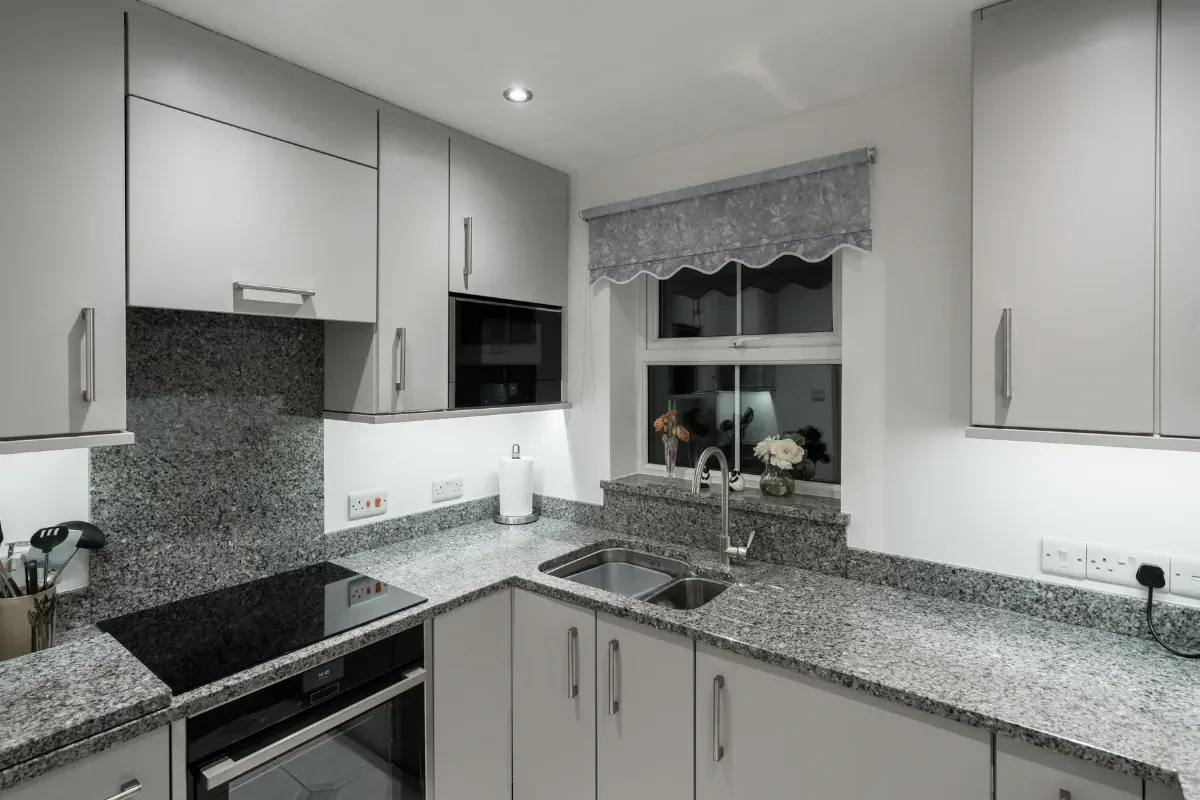
Are Granite Worktops Right for Me? – London 2026
You're standing in your kitchen, staring at tired countertops that have seen better days. Maybe they're chipped, stained, or just plain outdated. If you're considering granite worktops, you're not alone. Granite has been a premium choice for London homeowners for decades, but is it the right fit for your kitchen?
Quick take: Granite worktops offer unmatched natural beauty, exceptional durability, and heat resistance that synthetic materials can't match. They require periodic sealing and professional installation, but in return, you get a one-of-a-kind surface that can last a lifetime. Costs in London typically range from £400-£600 per square metre installed, with the investment adding real value to your home. If you want a kitchen worktop that's as good to use as it is to admire, granite deserves serious consideration.
What Granite Worktops Are (and What They Aren't)
Granite worktops are slabs of natural stone cut from quarries, then polished for use in kitchens. Unlike engineered quartz countertops which are man-made from crushed stone and resins, granite is naturally occurring. It's quarried from the earth as large blocks of igneous rock and sliced into slabs. Each granite slab is composed of minerals like quartz, feldspar, and mica, giving it that characteristic speckled or veined appearance.
Here's what granite isn't: it's not an artificial composite, not laminate, and not made of plastic. Granite is quarried in large slabs, not poured or moulded, so it has natural variation and minor imperfections that give it character. While extremely tough, it isn't maintenance-free. Being a natural stone, it requires sealing and care. But for those wanting an all-natural, one-of-a-kind centrepiece in the kitchen, granite offers exactly that.

Key Benefits of Granite in Kitchens
Granite has remained a popular premium worktop choice for decades. Here's why it continues to earn its place in London kitchens:
Exceptional Durability: Granite is one of the hardest natural materials used in kitchens, rating 5-7 on the Mohs mineral hardness scale. Normal kitchen use won't easily scratch or damage the stone. Cutting on granite is more likely to dull your knives than harm the surface.
Heat Resistance: Granite was formed by heat and pressure under the earth's crust, so it naturally withstands high temperatures. You can place hot pans or trays directly on granite briefly without scorching the surface. Unlike laminate or wood that might melt or char, granite won't be phased by typical cooking temperatures.
Stain Resistance: When sealed properly, granite becomes highly resistant to stains from food, drinks, and oils. Spills tend to stay on the surface longer, giving you time to wipe them up. Homeowners find granite simple to keep clean day-to-day.
Unique Natural Beauty: Every granite slab is essentially a piece of natural art. Granite offers a stunning appearance with rich colours and intricate patterns not found in man-made materials. The stone's natural shimmering crystals and depth of colour give a sense of luxury that can elevate your entire kitchen.
Adds Real Estate Value: Installing granite is viewed as a premium upgrade that can boost resale value and appeal to buyers. Homebuyers often see granite worktops as a sign of a well-finished, upscale kitchen.
London Kitchen Fitting's, vetted fitters have fitted granite worktops across the capital for nearly two decades. From Victorian terraces in North London to modern flats in East London, they have seen firsthand how granite brings together beauty, strength, and value.
Granite Colours, Patterns, and Finishes
One of the joys of choosing granite is the huge variety available. Common granite colours include classic blacks, whites, and greys, as well as earth tones like beiges and browns, and more exotic shades of gold, red, green, blue, or even pink. You can find deep black granites like Absolute Black, sparkling white granites with grey veining, or dramatic blue and green granites flecked with other hues.
Beyond colour, granite is prised for its patterns. Some granites have a consistent, fine-grained "salt-and-pepper" look, while others feature large sweeping veins. This variety means you can find granite to match almost any aesthetic.
Polished Finish: The most common finish, buffed to high-gloss, reflective sheen. A polished finish closes the stone's pores, making granite more resistant to stains. Most traditional kitchens feature polished granite for that elegant, glossy look.
Honed Finish: Ground to a smooth but non-reflective surface with soft matte appearance. Honed granite can be more prone to showing stains if not sealed well, requiring more frequent sealing.
Leathered Finish: A textured surface with slight sheen created by brushing the slab. This brings out natural pits and grooves. Leathered granite hides fingerprints and water spots better than honed.
Whether you're fitting a kitchen for a Howdens design or a Wren layout, the right granite finish can transform the space.
Durability and Performance: Heat, Scratches, Stains, and Chips
Heat Resistance: Granite excels at handling heat. You can safely place hot pots and pans on granite for short durations without fear of scorching. The stone absorbs and dissipates heat. As a precaution, use trivets for prolonged exposures.
Scratch and Cut Resistance: Granite is extremely hard, so hard that steel utensils won't scratch it under normal use. You can cut food directly on granite; you're more likely to dull your knife instead. Using a cutting board is still advised to protect knives.
Stain Resistance: While granite has some porosity, it's far less porous than marble. When you apply a penetrating sealer, those pores get filled, making the surface resistant to stains. With good sealant, granite won't readily absorb liquids.
Chip and Crack Resistance: Under normal use, granite won't crack or chip from daily wear. Its edges are most vulnerable. If a heavy object hits a sharp edge with force, a small chip is possible. Proper installation virtually eliminates crack risks. Small chips can be repaired with epoxy filler.
Whether you're in South London or West London, granite's robust nature stands up to heavy use.

Granite Worktop Costs in London
Granite worktops are premium, but prices have become more accessible. In London, expect costs towards the higher end of national ranges. Typical cost in London for standard granite (material and installation) is £400-£600 per square metre. Exotic options can cost £900+ per square metre.
Additional features add to total cost. Most quotes include fees for each cut-out, drainer grooves, edge upgrades, and corner shaping.
To illustrate: imagine a medium London kitchen needing 5 square metres of granite. If the granite is £400 per square metre installed, base cost is £2,000. Add one undermount sink cut (£180), one hob cut-out (£120), drainer grooves (£150), and premium edge (£100). Plus VAT at 20%. Total roughly £3,060.
Within London, shop around. Darker, common granites tend to be cheaper, while light or rare colours cost more. Budget around £300-£500 per square metre for quality granite in London, fully installed. Average kitchens might spend £2,500-£4,000. While not cheap, granite's longevity and added value make it worthwhile.
Fitting and Installation Basics: Templating, Cut-outs, Joins, and Timelines
Installing granite requires experienced professionals. Here's how it works:
Templating: Once base cabinets are secured level, installers create a template, often using digital laser measures. This captures exact dimensions including sink and hob placements. Templating typically takes an hour or two.
Fabrication: Granite is cut to size in workshops using diamond blade saws. Edges are polished to desired profiles. Timeline between templating and installation is usually one to two weeks.
Installation Day: When polished granite is ready, the team installs it. Granite slabs are brought in (a 3m slab can weigh hundreds of kilograms). Installers set each piece using adhesives, aligning pieces so seams are tight. Seams are filled with colour-matched epoxy. Installation typically takes 4-6 hours.
Sealing: Installer applies sealer to the surface. They wipe it on, let it penetrate, then wipe off excess. Edges to walls are caulked.
Timeline: From templating to finished installation is usually 1.5 to 3 weeks total. Within 24-48 hours your kitchen is operational.
Whether you're working with an IKEA kitchen or a B&Q layout, professional installation ensures your granite fits perfectly.
Cleaning and Care
Granite is relatively easy to maintain. For daily cleaning, use soft cloth with warm water and mild dish soap. Avoid harsh cleansers like bleach, ammonia, or abrasive powders because these can dull the sealant. You can use pH-neutral stone cleaner which is safe and leaves no streaks.
Don't use vinegar or lemon juice for cleaning granite. Although granite is fairly acid-resistant, repeated use of acidic cleaners can degrade the sealer. For sticky messes, a plastic scraper can gently remove residue without scratching.
The big maintenance task is sealing. Wipe spills promptly, especially juice, coffee, oil, or acidic sauces. While sealed granite should resist staining, don't leave spills overnight. Every year or two, test if it's time to re-seal using the water drop test. If water soaks in rather than beading, reapply sealer. That's it. Granite doesn't demand much, and maintained this way, it'll stay beautiful for decades.
Final Thoughts: Are Granite Worktops Right for You?
Granite worktops offer a timeless combination of beauty and durability. As a material forged in nature, each granite slab brings unique character to a kitchen, a blend of colours and patterns that can't be replicated by man-made products. Despite the rise of engineered stone alternatives, granite has held its place firmly in both traditional and modern designs.
From a practical standpoint, granite checks many boxes: tough against heat, resistant to scratches and stains, and long-lasting. Homeowners who install granite find that even after years of cooking, chopping, spilling, and placing hot pans, their countertops look and perform nearly as well as day one. The phrase "rock solid" really does apply. Granite's innate strength gives you confidence to truly use your kitchen without babying the counters.
There's also pride of ownership with granite. It's a premium feature that can become a selling point of your home and a personal source of joy each day. The depth and sheen of real stone add richness that synthetic materials strive to copy. Granite can pair with high-end cabinetry to create a luxurious chef's kitchen, or be the one upscale touch in a modest kitchen that instantly raises the room's appeal.
While granite costs more upfront than budget options, it rewards you with exceptional durability, a timeless aesthetic, and increased property value. It's an investment in quality you can feel under your fingertips every day.
In conclusion, granite worktops remain a fantastic choice for homeowners who want top-performing countertops that don't compromise on looks. It marries the art of nature with the function of daily life. Whether you're an avid cook, a busy family, or someone who loves the look of natural stone, granite fits the bill. With its proven track record, granite offers a sense of permanence and luxury few materials can match.
If you're ready to explore granite worktops for your London home, get in touch.

Granite Worktops FAQs
Do granite worktops need to be sealed? How often?
Yes. Granite is porous, so sealing is recommended to protect against stains. When installed, the fabricator usually applies sealer. Re-seal periodically, typically once a year. Dense dark granites can go longer, while lighter or honed granites might need annual sealing. Use the water test: if water soaks in instead of beading up, it's time to reseal. Wipe on stone sealer, let it soak, then wipe off excess.
Can I cut directly on my granite countertop?
You can, because granite won't scratch. However, cutting on granite will dull your knives quickly. The stone is harder than knife steel. It's recommended to use a cutting board for food prep and to protect your knives.
Can I put hot pots and pans directly on granite?
Yes, you can place hot cookware on granite briefly. Granite is highly heat resistant. However, use trivets for very hot or prolonged heat exposure to protect the sealant.
Do granite worktops chip or crack easily?
In normal use, granite rarely chips or cracks. The material is very hard. Edges are most vulnerable. If something heavy hits an edge with force, a small chip could occur. These can be repaired with epoxy. Cracks are uncommon and usually related to improper installation or support.
How do I clean and maintain granite worktops?
Use soft cloth with warm water and mild dish soap daily. Avoid harsh cleansers like bleach or ammonia. Don't use vinegar or lemon juice. Wipe spills promptly. Every year or two, test if re-sealing is needed using the water drop test.
What is the difference between granite and quartz worktops?
Granite is natural stone quarried from earth. Quartz is man-made, about 90-95% ground quartz mixed with resin. Granite has unique patterns; quartz is more uniform. Granite needs sealing; quartz doesn't. Granite handles heat better; quartz resin can be damaged by high heat. Both are scratch resistant and durable.
Will my granite worktop look exactly like the sample?
Probably not exactly. Granite is natural, so expect variation. If possible, view and choose the actual slab for your countertop. Most suppliers let you pick the slab. Veining can vary in direction and intensity. Generally, variation is beautiful. If you embrace the uniqueness, you'll love that your granite is one of a kind.