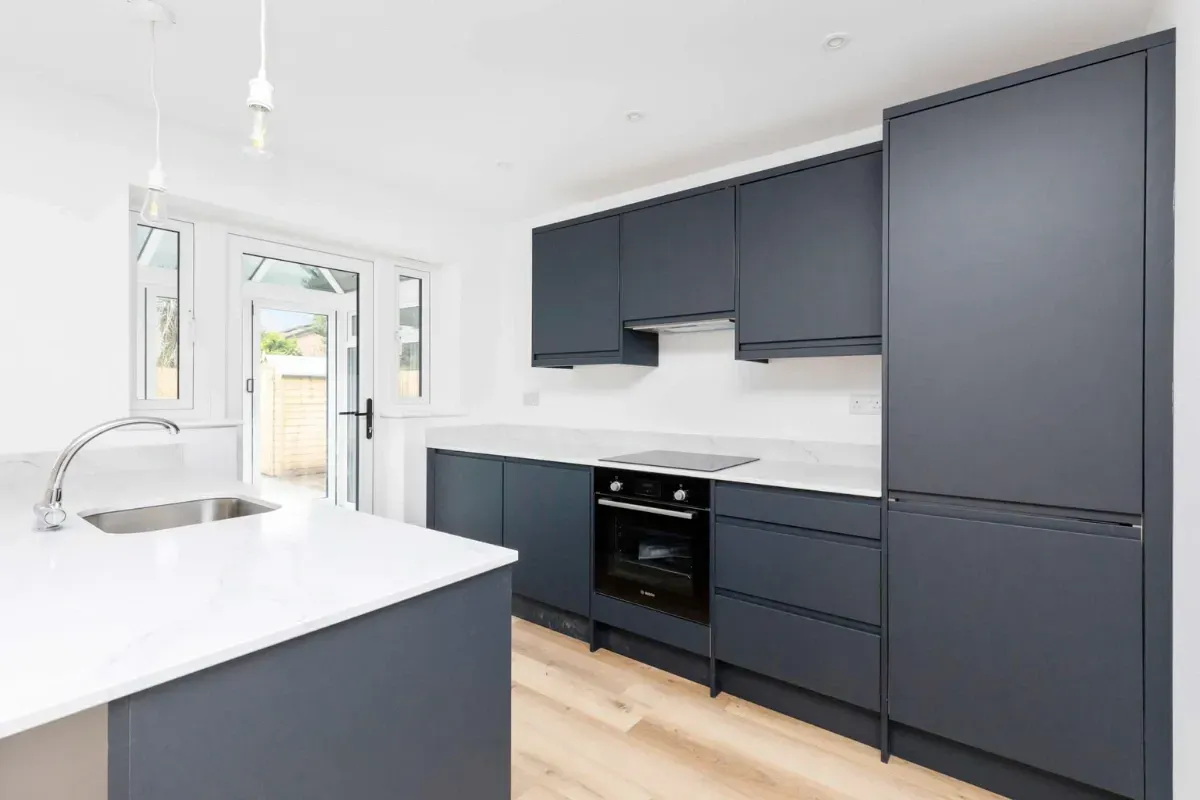
How Integrated Appliances Help Your London Kitchen
You've seen those kitchens where everything looks perfectly streamlined, where appliances blend so seamlessly you can hardly tell where the cabinets end and the machines begin. That's the magic of integrated kitchen appliances, and it's becoming the choice for London homeowners who want a kitchen that feels calm, sophisticated, and truly theirs.
Quick take: Integrated kitchen appliances sit flush with your cabinetry and hide behind matching doors, saving space whilst adding a high-end feel. While they cost more upfront, they're perfect for London's compact kitchens where every inch counts and visual continuity matters. You can integrate everything from fridges and dishwashers to washing machines and ovens, creating a kitchen that works beautifully whilst looking effortlessly elegant.
Table of Contents
What Are Integrated Appliances in Kitchens?
Which Kitchen Appliances Can Be Integrated in London?
Pros and Cons of Integrated Appliances in Kitchens
Design & Layout Tips for Integrated Appliances
Practical Considerations: Ventilation, Access, and Maintenance
Costs & Value: Are Integrated Appliances Worth It in London?
What Are Integrated Appliances in Kitchens?
Integrated kitchen appliances are built into your cabinetry rather than standing freely on display. Unlike freestanding units with visible sides and backs, integrated appliances sit flush with surrounding cabinets and can be concealed behind cabinet doors that match your kitchen.
An integrated fridge or dishwasher has a front panel fixed to it that matches your cabinet doors exactly. When closed, it looks just like another cupboard, creating continuous flow with no protruding edges. Most integrated models are built to standard dimensions (typically 60cm wide) and designed not to stick out beyond your worktop.
This approach works brilliantly in London homes where open-plan living means your kitchen is also your entertaining space. When everything tucks away neatly, the whole area feels more like a room you'd actually want to spend time in.

Which Kitchen Appliances Can Be Integrated in London?
Nearly every major kitchen appliance now comes in an integrated version. The most popular choices are fridges, freezers, and dishwashers, fitted with cabinet doors that blend with your units. These are designed to fit standard widths and often come in taller, slimmer configurations.
Ovens and microwaves are commonly built into cabinetry at eye level, saving your back from crouching. Hobs sit flush with worktops, and range hoods can be hidden within cabinetry. Here's where London kitchens really differ: washing machines are frequently integrated into the kitchen itself. Without separate utility rooms in most flats and terraces, tucking your washer behind a cabinet door maintains that clean look London homeowners prize.
You can also integrate wine coolers and coffee machines. Whether you're fitting out a Howdens kitchen, Wren design, IKEA kitchen, or B&Q layout, integrated appliances adapt to any style and help even small London kitchens feel more spacious.
Pros and Cons of Integrated Appliances in Kitchens
The Advantages
The biggest draw is that polished, high-end appearance. Integrated appliances create clean lines with no bulky units interrupting the flow. This is particularly valuable in East London warehouse conversions or West London period properties where the kitchen is part of an open living space.
They make your kitchen feel more spacious too. Because appliances sit flush without protruding, every inch gets used efficiently. In London where square footage is precious, this matters. Unique spaces become possible.
There's also quieter operation. Cabinet doors provide extra sound insulation, perfect for open-plan layouts where kitchen and living areas flow together. Plus, you get flexibility in placement - put your oven at eye level or position appliances exactly where you need them.
The Trade-Offs
The main consideration is cost. Integrated kitchen appliances typically cost more than freestanding models. You're paying for specialized design and premium brands, plus custom cabinet work and more involved installation.
Because they're built to cabinet dimensions, integrated appliances often have slightly smaller capacity. An integrated fridge flush with your counter won't be as deep as a freestanding one.
You'll find less choice in the market. Not every brand makes panel-ready versions, and once built in, you're locked into that layout. Maintenance can also be trickier - pulling out an integrated appliance takes more effort than a freestanding unit.
For many London homeowners, the advantages outweigh the downsides. But go in with your eyes open about what you're gaining and what you're trading away.
Design & Layout Tips for Integrated Appliances
Getting integrated kitchen appliances right means thinking beyond hiding them. Thoughtful planning ensures your kitchen looks good and works brilliantly.
Create visual symmetry. Place tall cabinets either side of your integrated fridge so the section looks uniform. Use handleless or integrated handles consistently for that ultra-clean look.
Think about workflow. Keep the work triangle in mind: fridge, hob, and sink should form an efficient path. Position your fridge near the entrance so people don't cut through your cooking zone. Put the dishwasher near the sink. The goal is natural flow.
Plan for door clearance carefully. Integrated appliances need space for doors to open fully. A fridge door might need to swing past 90 degrees. Don't put a dishwasher in a corner where it blocks adjacent cabinets. Aim for at least 90cm of clearance.
In narrow galley kitchens common across South London terraces, consider slimline models to minimize clearance issues. If you have an island, ensure there's room to walk past when doors are open.
Don't forget ventilation. Integrated fridges and ovens need airflow. Most require a vent in the plinth beneath them and a gap above or behind. Follow manufacturer specifications exactly.

Practical Considerations: Ventilation, Access, and Maintenance
Beyond design, integrated kitchen appliances need practical attention to work long-term.
Ventilation is non-negotiable. Unlike freestanding units, integrated appliances sit in tight cabinet spaces. Heat-generating units must expel warm air, or they'll work harder and wear out faster. Most need a vented plinth to draw in cool air and space at the top or back to let warm air escape. Inadequate ventilation is a leading cause of premature failure.
Plan for access. Integrated appliances are secured with screws and brackets, meaning extraction takes more effort. Understand how each appliance is fixed and keep installation diagrams. For appliances with water supplies, ensure the shutoff valve is accessible.
Repairs can be more involved. Simple maintenance is the same as with freestanding units, but anything involving the back or sides means a partial uninstall. When replacing, measure carefully and find models that fit the exact space.
Keep up with routine cleaning. Day-to-day cleaning is often easier - you're wiping cabinet doors rather than stainless steel. But inside, clean condenser coils and ensure ventilation openings don't get clogged.
Use professional installers. They'll secure units properly whilst allowing for future removal and ensure everything works correctly. Whether you're in North London or anywhere across the city, professional installation ensures your kitchen performs as well as it looks.
Costs & Value: Are Integrated Appliances Worth It in London?
In a city where space is expensive and design matters, integrated kitchen appliances often make sense if your budget allows.
The upfront investment. Integrated appliances typically cost 20-30% more than freestanding models. You're paying for specialized design and premium brands, plus custom cabinet work and more involved installation.
But consider what you're getting. Integrated kitchen appliances can increase your property's desirability. An integrated kitchen suggests a modern, well-thought-out home. Buyers appreciate a turn-key kitchen needing no upgrades. In the UK, integrated appliances typically stay with the property as fixtures, which buyers value.
The daily value. Beyond resale, there's the value of living in a nicer space now. London homes often have kitchens flowing into living areas. Hiding appliances makes your whole space feel more refined. By using integrated appliances smartly, you might gain additional storage or room for a small dining area.
Is it worth it? For homeowners who value aesthetics and efficient space use, integrated kitchen appliances are worth the investment. You'll pay more upfront, but you're investing in your own enjoyment and potentially your home's appeal. The difference is substantial.
If you're renovating in a desirable area or creating your dream kitchen, the extra expense often feels justified. If budget is tight, you might integrate just key appliances whilst keeping others freestanding.
At London Kitchen Fitting, we help homeowners understand exactly what they're getting and make choices aligning with both vision and budget.
Final Thoughts on Integrated Appliances in Kitchens
Integrated kitchen appliances can genuinely transform a kitchen from purely functional to something special. By concealing appliances behind cabinet doors, you create visual calm that makes the whole space more inviting.
This approach is particularly powerful where kitchens are often compact and part of open-plan living. When everything tucks neatly away, your kitchen feels larger and more like a room you'd want to spend time in.
That said, integrated appliances aren't automatically right for everyone. They require higher investment and more thoughtful planning. You're committing to a particular layout with less flexibility later. Maintenance can be more involved, and you'll have slightly less internal storage capacity.
The key is using integration strategically. Maybe you integrate your dishwasher and fridge for that clean look, but keep a feature range cooker freestanding. There's no single right answer - it depends on your priorities and budget.
What matters is deliberate planning. Think about how you cook and what will make your daily life better. Consider ventilation, door clearances, and future access alongside visual appeal. When executed well, an integrated kitchen delivers a space that feels custom-tailored.
For many homeowners working with limited square footage, integrated kitchen appliances offer the best way to achieve a kitchen that's both beautiful and practical. If you'd like to talk through what an integrated kitchen might look like in your home, get in touch. We're here to help you create a kitchen that takes centre stage.

Integrated Appliances in Kitchens FAQs
What's the difference between integrated and built-in appliances?
The terms are closely related but there's a subtle distinction. Integrated appliances are designed to be completely concealed by cabinetry, usually with a door panel mounted on the front. Built-in appliances are also installed within cabinetry, but might have visible fronts. So integrated units are fully panelled, whilst built-in units are enclosed but may be partially visible.
Are integrated appliances more expensive than freestanding ones?
Generally yes. You'll pay a premium for integrated versions because they have specialized dimensions. The appliances often cost 20-30% more than comparable freestanding models, plus you'll need custom panels and more involved installation. However, many find the aesthetic and space benefits worth the investment, especially where every inch counts.
Do integrated appliances add value to my London home?
They can. An integrated kitchen is often seen as a premium feature suggesting a modern, well-designed home. In London's competitive market, this can make your home more appealing to buyers who want a turn-key kitchen. In the UK, integrated appliances typically stay with the property as fixtures, which buyers appreciate. A well-executed integrated kitchen can differentiate your property and potentially justify a higher asking price.
Can I replace an integrated appliance easily when it breaks?
Replacing an integrated appliance takes more planning than swapping a freestanding unit, but it's doable. The main challenge is finding a new model that fits the exact space and works with your existing cabinet door panel. Appliance dimensions are fairly standardized, but heights and depths can vary. Measure your cabinet cutout carefully and check specifications before buying. You'll need to unfasten the old appliance from the cabinetry, which is more involved than wheeling out a freestanding unit. A professional installer can handle this smoothly.
How do I ventilate an integrated fridge or freezer properly?
Integrated fridges and freezers need proper airflow to prevent overheating. Most models draw cool air in from the bottom front (behind the plinth) and expel warm air at the top or back. Make sure there's a vent cutout in the kickboard beneath the fridge door, leave the recommended gap behind the unit, and allow space above it if specified. Follow the manufacturer's installation manual exactly, as inadequate ventilation is a leading cause of appliance failure.
Are integrated dishwashers and washing machines quieter?
Often yes, noticeably so. The cabinet enclosure and door panel act as an extra sound barrier, muffling operational noise. Many integrated dishwashers also include additional insulation because manufacturers know buyers prioritize quiet operation in open-plan spaces. Users frequently report their integrated dishwashers are so quiet they barely notice them running, perfect for London homes where the kitchen shares space with living areas.
If I move house, can I take my integrated appliances with me?
Technically you could, but it's uncommon and often impractical. In the UK, integrated appliances are considered fixtures and contracts typically assume they stay with the property unless explicitly excluded. Removing them would leave gaps in your kitchen and possibly damage cabinetry. From a practical standpoint, integrated appliances are customized to fit that specific kitchen. Installing them in a new home would require identical cabinet dimensions or a renovation. Most people leave integrated appliances behind and factor them into the property's value when setting the asking price.
