What is an Open Plan Kitchen? Smart Choice? - London
Thinking about knocking down a wall and opening up your kitchen? You're not alone. Open plan kitchens have become one of the most requested renovations for London homeowners, and it's easy to see why. More light, more space, more life in one room. But it's worth knowing what you're getting into before you commit.
Quick take: An open plan kitchen removes the walls between your kitchen, dining, and living areas to create one connected space. The big draws are natural light, a social atmosphere, and a sense of spaciousness. The trade-offs are noise, cooking smells, and keeping things tidy when everything's on show. This blog covers it all: what open plan kitchens are, their pros and cons, how to lay one out well, and whether it's the right move for your London home.
Table of Contents
Understanding Open-Plan Kitchens: What They Are and Why They're Popular
Key Benefits of an Open-Plan Kitchen
Potential Drawbacks to Consider
Layout and Zoning Ideas to Make Open-Plan Spaces Work
Design Tips: Storage, Lighting, and Materials for Open-Plan Kitchens
Understanding Open-Plan Kitchens: What They Are and Why They're Popular
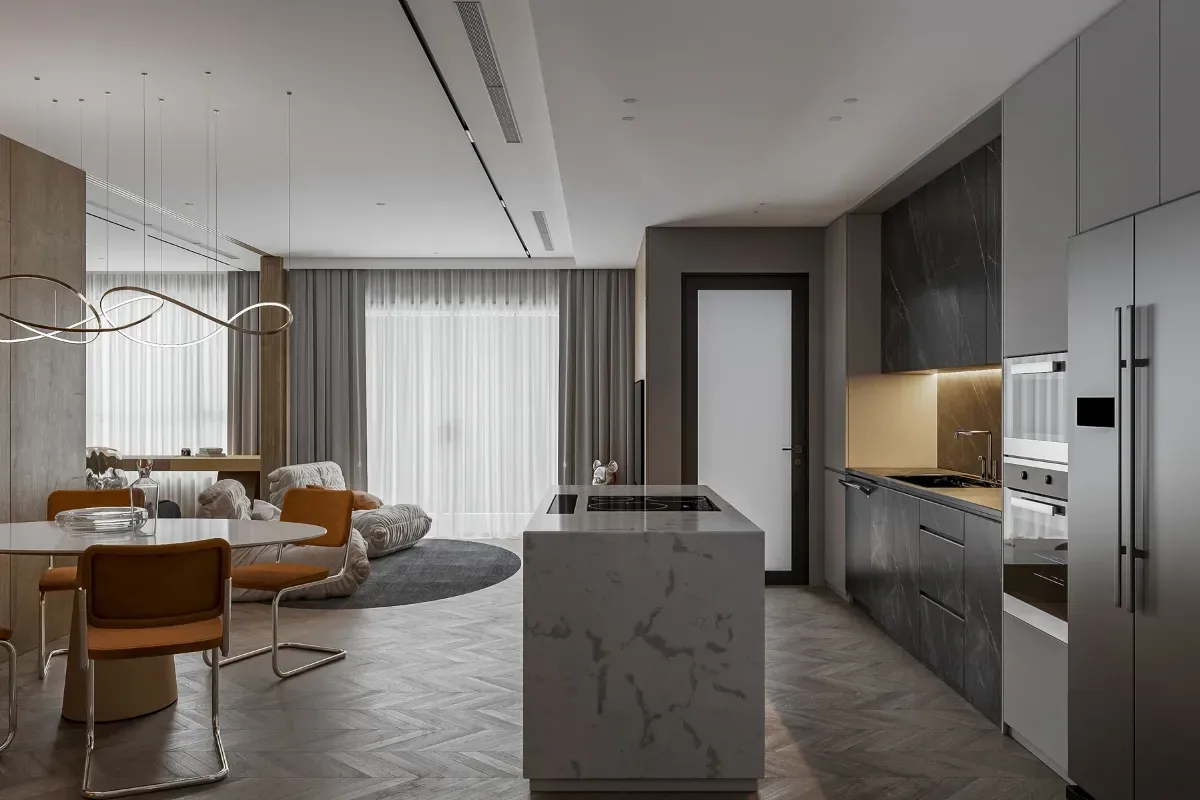
An open plan kitchen is exactly what it sounds like: a kitchen without walls separating it from the rest of your living space. The kitchen, dining area, and lounge share one continuous space. You can flow freely between cooking, dining, and lounging without passing through a single doorway.
Older London properties, your Victorian terraces, your Edwardian semis, your post-war conversions, were built with closed-off kitchens. The kitchen was a working room, kept separate from where guests sat. Modern living has moved on from that. Households want connection. Parents want to keep an eye on children while cooking. The kitchen has become the heart of the home, and open plan layouts are the natural answer to that shift.
In London especially, where square footage comes at a premium, opening up a ground floor can make a real difference. A kitchen that runs into a dining area that runs into a lounge feels far more generous than the same square footage split across three separate rooms.
Key Benefits of an Open-Plan Kitchen
There's a reason open plan kitchens have dominated renovation trends for years. Here's what you stand to gain.
More natural light throughout the space
Walls block light. Take them away and sunlight from a rear garden door or a living room window reaches the whole ground floor. For London homes, many of which are terrace properties with limited window positions, this can be a genuine game-changer.
Better flow and a greater sense of space
Without partition walls, movement through the space becomes easier and more natural. For smaller London homes in particular, this makes the ground floor feel considerably more spacious than it actually is. Furniture can be arranged more freely too, since you're not constrained by where walls fall.
A genuinely social kitchen
In a closed kitchen, the cook is cut off. In an open plan kitchen, hosting guests becomes far easier because everyone can move freely between the kitchen and living areas. Parents can prep dinner while keeping an eye on children in the lounge. The kitchen becomes part of life, not separate from it.
Potential added value to your property
UK industry estimates suggest an open plan kitchen and living space can add as much as 15% to a property's value. In a city like London, that's a meaningful return. Our kitchen fitting service is built around exactly this kind of transformation.
Potential Drawbacks to Consider
An open plan kitchen isn't right for every household. There are real trade-offs worth knowing before you commit.
Noise carries everywhere
Without walls to absorb sound, kitchen noise travels freely into the living area. The dishwasher, the extractor hood, the blender at 7am: all of it reaches the sofa. For households with young children, shift workers, or anyone who values quiet, this is worth thinking through.
Cooking smells don't stay in the kitchen
In a closed kitchen, you shut the door after a fish supper and the smell stays contained. In an open plan layout, whatever you cook fills the whole ground floor. A good extractor hood is non-negotiable, but even then, strong smells will always travel further in an open space.
Everything is always on show
A closed kitchen door hides a multitude of sins. An open plan kitchen doesn't offer that escape. Unwashed pans, cluttered worktops, a stack of post on the counter: all visible from the sofa. It puts a daily pressure on tidiness that some households manage easily and others find genuinely stressful.
You lose wall space and storage
Knocking out a wall means losing cabinet space. Storage planning needs to happen before you commit, because what you lose from a removed wall has to be found elsewhere. Islands, pantry cupboards, and floor-to-ceiling cabinetry all become more important in an open plan layout.
Layout and Zoning Ideas to Make Open-Plan Spaces Work
The challenge with an open plan kitchen isn't knocking the wall down. It's making the space feel organised and purposeful rather than one large, undefined room. Zoning is the answer.
Use a kitchen island as a natural divider
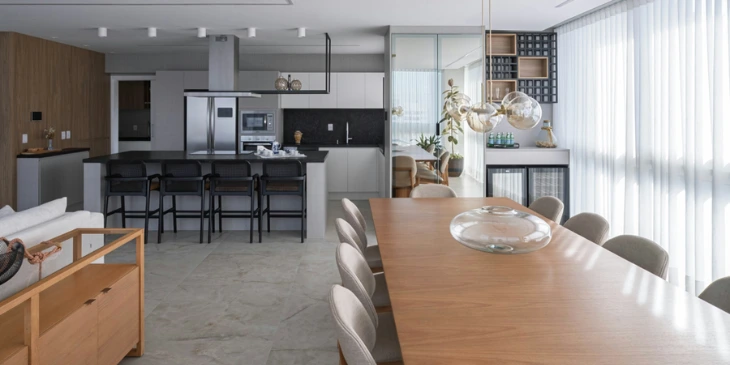
A well-positioned island defines the kitchen boundary, adds worktop space and storage, and gives guests a natural place to gather without getting under your feet. Bar stools on the living room side create a casual social zone between kitchen and lounge. Our Howdens and Wren installations regularly incorporate islands for exactly this reason.
Arrange furniture to create zones
You don't need walls to make a dining area feel distinct from a lounge. A sofa positioned with its back toward the kitchen anchors a living room zone. An area rug under the coffee table groups the seating area. A pendant light above the dining table signals that spot as the dining zone. Subtle cues, but they work.
Consider a broken-plan approach
Not everyone wants fully open. A broken-plan layout keeps the ground floor largely open but adds a half-wall, glazed partition, or large sliding doors that can be closed when you need to contain noise or smells. It's a practical solution for London homes where the ground floor is long and narrow.
Use flooring and ceiling changes to define areas
A change in flooring between the kitchen and living area creates a subtle boundary without breaking the open feel. Many London homeowners use tile or LVT in the kitchen zone and transition to engineered wood or carpet in the lounge. A dropped bulkhead above the kitchen run can do the same job overhead.
Design Tips: Storage, Lighting, and Materials for Open-Plan Kitchens
Getting the design right means thinking about the whole ground floor. Everything is visible from everywhere, so cohesion matters more than it does in a closed kitchen.
Plan your storage before anything else
Losing a wall means losing cabinet space. Floor-to-ceiling cabinetry, a generous island with integrated storage, or a tall pantry unit can all compensate. IKEA and B&Q ranges both offer deep storage options that work well in open plan layouts. In an open plan space, you can't just close the door on the chaos, so plan accordingly.
Layer your lighting
A single ceiling light won't cut it. You want task lighting over the worktops and hob, pendant lights above the island and dining table to anchor those zones, and softer ambient lighting in the lounge. Keeping fixture styles consistent across zones ties everything together without making it feel uniform.
Coordinate materials and colours across the whole space
Because the kitchen, dining, and living areas are all visible from each other, their finishes need to work together. That doesn't mean everything has to match, but there should be a thread of continuity. If your cabinets are painted in a warm off-white, carry that tone into the living area walls. If you're using a natural wood worktop, echo it in the dining table or shelving.
Invest in quiet, well-designed appliances
In a closed kitchen, a loud dishwasher is an annoyance. In an open plan kitchen, it's a genuine problem. Choose appliances with low noise ratings, go powerful and ducted with your extractor hood, and consider panel-ready finishes that blend with your cabinetry. In an open plan layout, appliances are always on show and always audible.
Final Thoughts on Open-Plan Kitchens
An open plan kitchen changes how a home feels from the moment you walk in. More light, more space, more connection between the people in it. For households that cook regularly, host friends, or want to keep an eye on children while getting dinner on, it can genuinely transform daily life.
That said, it's not the right choice for everyone. If you value quiet or a kitchen you can shut the door on, a fully open layout might not suit you. The broken-plan approach is increasingly popular precisely because it gives households flexibility rather than forcing a binary choice.
What matters most is that your kitchen fits the way you actually live. At London Kitchen Fitting, that's how we approach every job, whether you're in North London, South London, East London, or West London. Our about us page tells you more about who we are, and our contact page is the easiest way to get in touch.
Open Plan Kitchens FAQs
What is an open plan kitchen?
An open plan kitchen is a kitchen without walls separating it from the adjacent dining and living areas. The kitchen, dining table, and lounge share one continuous space. Features like an island or peninsula often define the kitchen boundary in place of a wall.
How do I deal with cooking smells in an open plan kitchen?
Invest in a powerful, ducted extractor hood, one sized slightly larger than you'd choose for a closed kitchen. Run it during and after cooking, open windows where possible, and use lids to reduce what escapes. Some households also incorporate a small utility space for messier cooking to keep the main kitchen clear.
How can I reduce noise in an open plan layout?
Start with quiet appliances: a low-decibel dishwasher and an extractor hood with a quiet high-speed setting make a real difference. Soft furnishings absorb sound. If you need more separation, glazed partitions or sliding doors can section off the kitchen without closing it off entirely.
Are open plan kitchens still popular in London?
Very much so. They remain one of the most common renovation choices for London homeowners, particularly in Victorian and Edwardian terraces where knocking through dramatically improves how the ground floor functions. There's also growing interest in broken-plan approaches that balance openness with the option for some separation.
Do open plan kitchens add value to a London home?
They can. UK property experts estimate an open plan kitchen and living space can add up to 15% to a property's value. In London's competitive market, a well-executed open plan ground floor is consistently attractive to buyers.
Is planning permission needed to open up a kitchen in London?
Most internal wall removals don't require planning permission, but Building Regulations approval is likely needed if the wall is load-bearing. A structural engineer will need to assess it and specify any steelwork required. At London Kitchen Fitting, we handle structural elements as part of our fitting service, so you don't need to manage multiple contractors yourself.
