
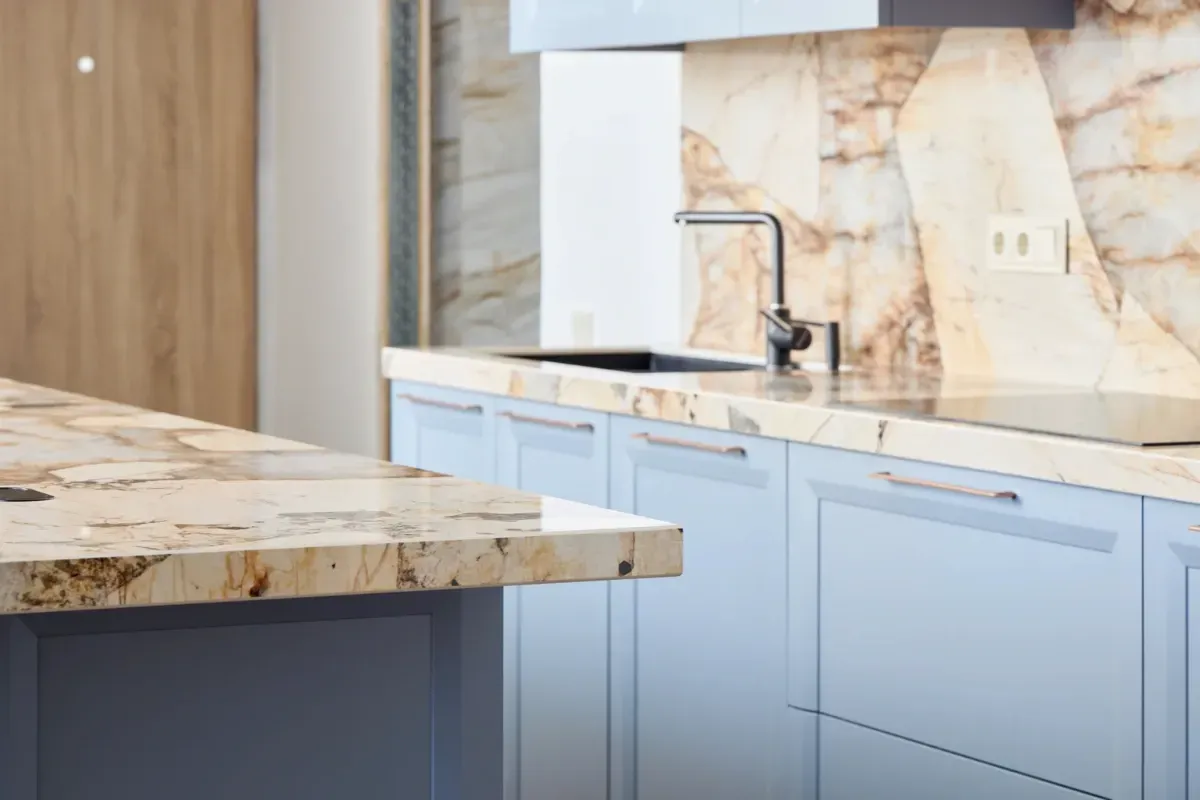
Do Porcelain Worktops work? – London 2026
You're standing in a showroom somewhere in London, running your hand across a worktop that looks like Carrara marble but feels warmer, smoother, almost too perfect. The salesperson says it's porcelain. You've heard the name before, seen it on tiles, but worktops? That's new.
Quick take: Porcelain worktops are ultra-dense ceramic slabs that resist heat, stains, and scratches better than most materials. They're non-porous, low-maintenance, and come in stunning finishes that mimic natural stone or concrete. The trade-off? They can chip on impact, cost more than laminate, and need professional fitting. For London kitchens where durability meets design, they're worth serious consideration.
Table of Contents
Key benefits of porcelain worktops
Durability: heat, stains, scratches, chips, and UV
Porcelain worktop costs in London
Fitting basics: templating, joins, cut-outs, edges, and timelines
What Porcelain worktops are
Porcelain worktops aren't just oversized tiles slapped onto your cabinets. They're engineered slabs made from refined clay, minerals, and natural pigments, fired at extreme temperatures (around 1,200-1,400°C) until they fuse into a single, ultra-compact surface. The result is a material with 0.5% absorption or less, which puts it in a league of its own for kitchen use.
Unlike quartz, which relies on resin binders, or granite, which is quarried and polished, porcelain is created from scratch in controlled conditions. That means consistency in colour, pattern, and performance. Many porcelain slabs are through-body, meaning the design runs all the way through the material. Scratch the surface, and you won't expose a different colour underneath.
For London homes working with brands like Howdens, Wren, IKEA, or B&Q, porcelain offers a modern alternative between the affordability of laminate and the luxury of stone.
Key benefits of porcelain worktops
Porcelain countertops bring several advantages that make them a solid choice for busy kitchens across North London, South London, East London, and West London.
Heat resistance is one of the standout features. You can place a hot pan straight from the hob onto a porcelain surface without leaving a mark. The material doesn't warp, discolour, or crack under heat. That's a big deal if you're someone who cooks often and doesn't want to fuss with trivets every time.
Stain resistance comes from porcelain's non-porous nature. Turmeric, coffee, they don't penetrate the surface. A quick wipe with a damp cloth is usually enough. No sealing required, no annual maintenance rituals. Industry experts confirm porcelain repels liquids and prevents spills from becoming permanent reminders of Sunday dinner.
Scratch resistance is strong, though not invincible. Porcelain can handle daily chopping, sliding pots, and general kitchen chaos better than laminate or solid wood. You'll want to use a cutting board for heavy-duty knife work, but everyday wear won't leave it looking tired.
UV stability means porcelain won't fade in sunlight. If your kitchen gets flooded with natural light, or if you're planning a worktop near patio doors, porcelain keeps its colour year after year. No yellowing, no bleaching.
Hygiene is another quiet benefit. Because the surface is non-porous, bacteria and mould can't take hold. A simple wipe-down keeps things clean. For families with young children or anyone who values a low-fuss kitchen, that's reassuring.

Colours, styles, and finishes
Porcelain worktops come in a range of looks that can suit just about any kitchen style. Whether you're after clean minimalism, industrial edge, or classic elegance, there's a porcelain slab to match.
Marble-effect porcelain is hugely popular. You get the veining, depth, and visual weight of Carrara or Calacatta marble without the maintenance headaches. No sealing, no etching from lemon juice, no staining from Coffees.
Concrete-effect porcelain works well in contemporary kitchens. The matte, industrial finish pairs beautifully with handleless cabinets, exposed brick, and steel fixtures.
Stone-effect porcelain mimics granite, slate, or travertine. These finishes give you natural-looking variation and character, perfect for kitchens that want warmth and depth.
Solid colours are also available, from crisp whites to deep charcoals. These work well in kitchens where the worktop fades into the background and lets other elements take centre stage.
Finishes vary too. Polished surfaces are glossy and reflective, ideal for high-end shine. Matte finishes feel softer, more understated, and hide fingerprints better. Textured finishes add grip and visual interest, though they can be slightly harder to clean.
The versatility means porcelain fits into period properties in Islington, new builds in Canary Wharf, or family homes in Wimbledon.
Durability: heat, stains, scratches, chips, and UV
Let's talk about how porcelain actually holds up when life gets messy.
Heat: Porcelain laughs at hot pans. You can pull a roasting tray out of the oven and set it straight down without a second thought. The material doesn't scorch, warp, or crack. That said, sudden extreme temperature changes (like pouring ice-cold water on a scorching-hot surface) could theoretically cause thermal shock, but in everyday use, it's not a concern.
Stains: Porcelain countertops are virtually stain-proof. Oil, coffee, beetroot juice, they all wipe away. Because the surface is non-porous, liquids sit on top rather than soaking in. No need for special cleaners or annual sealing. Just a damp cloth and you're done.
Scratches: Porcelain is hard, but not diamond-hard. Normal kitchen use won't leave visible marks. You can slide pots, wipe down surfaces, and go about your day without worry. Heavy-duty cutting directly on the surface isn't recommended, knives can leave faint lines over time. Use a chopping board, and you'll keep things looking sharp.
Chips: Here's where porcelain shows its limits. It can chip if you drop something heavy on it, like a cast-iron pot or a ceramic dish. The edges are particularly vulnerable. Once chipped, the damage is visible and permanent. Repairs are tricky, unlike quartz where chips can sometimes be filled and blended. This is the main reason porcelain isn't for everyone. If your kitchen sees a lot of action and you're prone to the occasional drop, you'll need to weigh this carefully.
UV resistance: Porcelain doesn't fade. Sunlight won't change its colour, even after years of exposure. If your kitchen faces south and gets bathed in light all afternoon, your worktop will look the same in five years as it does on day one.
Overall, porcelain worktops are tough, but they're not indestructible. Treat them with a bit of care, and they'll serve you brilliantly. Expect them to survive anything without a scratch, and you might be disappointed.
Porcelain worktop costs in London
Porcelain isn't the cheapest option, but it's not the most expensive either. Here's what you're looking at if you're planning a kitchen in London.
Material costs for porcelain typically range from £150 to £300 per square metre, depending on the finish you choose. Basic solid colours or simple stone effects sit at the lower end. High-end marble replicas with intricate veining push closer to £300 per square metre.
Installation isn't a DIY job. Porcelain slabs are heavy, brittle during handling, and require precise cutting. Professional fitters charge for templating (measuring your exact kitchen layout), fabrication (cutting and shaping the slabs), and installation. Expect to pay around £100 to £200 per square metre for fabrication and fitting combined.
Cut-outs for hobs and sinks add to the bill. Each opening needs to be measured and cut with precision. Expect to pay around £80 to £150 per cut-out, depending on complexity.
Edge treatments affect both cost and aesthetics. A simple polished edge is straightforward and affordable. Bevelled or rounded edges add character and cost, typically £20 to £50 per linear metre.
When you add it all up, a typical London kitchen with around 10 square metres of worktop space might cost anywhere from £2,500 to £5,000 for porcelain countertops, fully installed. That's more than laminate, comparable to mid-range quartz, and less than premium granite or marble.
Fitting basics: templating, joins, cut-outs, edges, and timelines
Getting porcelain worktops installed properly makes all the difference. Here's what happens behind the scenes.
Templating is the first step. A professional fitter comes to your home, measures your kitchen layout, notes where your hob, sink, and any other fixtures will go, and creates a precise template. This is usually done after your cabinets are installed but before the worktop goes in. Accuracy here is crucial. Even a millimetre off can cause problems during installation.
Fabrication happens off-site. The porcelain slabs are cut, shaped, and polished according to your template. Holes are made for sinks and hobs, edges are finished, and joins are planned. Porcelain slabs can be large, sometimes big enough to cover an entire kitchen island in one piece, which reduces the need for joins and creates a seamless look.
Joins are sometimes unavoidable, especially in larger kitchens or L-shaped layouts. When two slabs meet, they're bonded with a specialist adhesive and the seam is polished to make it as invisible as possible. A skilled fitter can make joins almost undetectable, but they'll never be quite as invisible as a single continuous slab.
Cut-outs for hobs, sinks, and taps are made with precision tools. The edges of these openings are polished smooth to prevent chipping. This is delicate work, porcelain is strong once installed but can crack during cutting if not handled carefully.
Edges are finished to your specification. You might want a simple polished edge, a slight bevel, or a rounded profile. The edge treatment affects how the worktop looks and feels, and it's worth thinking about how it'll fit with your overall kitchen design.
Installation usually takes one to two days, depending on the size and complexity of your kitchen. The slabs are heavy and require at least two people to lift and position. Once in place, they're secured to the cabinets with adhesive. There's no flexing or movement once they're down.
Timelines from order to installation typically run two to four weeks. Templating happens first, fabrication takes a week or two, and installation is scheduled once everything's ready. Rush jobs are possible but not ideal, precision takes time.
If you're based in London and working with a kitchen fitting specialist, they'll handle the entire process, from templating through to final installation. It's not a job for amateurs, and getting it right the first time saves headaches later.
Final Thoughts on Porcelain Worktops
Porcelain worktops aren't perfect, but they come close for a lot of kitchens. They resist heat, stains, and scratches better than most alternatives. They look stunning, whether you want marble, concrete, or solid colour. They're low-maintenance, hygienic, and built to last.
The downsides? They can chip if something heavy lands on them. They're more expensive than laminate. And they need professional installation.
But if you're after a worktop that works hard and looks beautiful, porcelain delivers. It suits modern kitchens, period properties, family homes, and compact flats.
For London homeowners weighing up options, porcelain sits in that sweet spot between practicality and style. It's the kind of choice you make when you want a kitchen that feels like it's truly yours, one that'll stand up to real life and still look the part years down the line.
If you're ready to take the next step, get in touch or learn more about what we do. We're here to help you find the worktop that fits your home and your life.

Porcelain Worktops FAQs
Do porcelain worktops stain?
No. Porcelain countertops are non-porous, so liquids don't penetrate the surface. Juice, oil, coffee, they all wipe away easily. No sealing needed.
Can you put hot pans on porcelain worktops?
Yes. Porcelain handles high heat without warping, cracking, or discolouring. You can place hot pots and pans straight from the hob or oven onto the surface.
Are porcelain worktops hard to maintain?
Not at all. A quick wipe with a damp cloth keeps them clean. They don't need sealing, special cleaners, or annual treatments. Low-maintenance and practical for busy kitchens.
Do porcelain worktops chip easily?
They can chip if something heavy is dropped on them, especially along edges or corners. Once chipped, repairs are difficult. Handle with care during installation and daily use.
How much do porcelain worktops cost in London?
Expect £150 to £300 per square metre for material, plus £100 to £200 per square metre for fabrication and installation. A typical 10m² kitchen runs £2,500 to £5,000+ total.
Can I install porcelain worktops myself?
Not recommended. Porcelain slabs are heavy, brittle during handling, and require precision cutting. Professional installation ensures proper templating, cutting, and fitting.
Do porcelain worktops fade in sunlight?
No. Porcelain is UV-stable and won't fade, yellow, or bleach even with constant sun exposure. Perfect for kitchens with large windows or patio doors.
How do porcelain worktops compare to quartz?
Porcelain handles heat better and doesn't need sealing. Quartz is slightly more impact-resistant. Both are low-maintenance and durable. Cost is similar in London.
Are porcelain worktops hygienic?
Yes. The non-porous surface prevents bacteria and mould from taking hold. Easy to clean and safe for food preparation.
How long does installation take?
From templating to installation, expect two to four weeks. The actual fitting usually takes one to two days, depending on kitchen size and complexity.