

How to Prepare Your Home for Kitchen Installers in London
Getting a new kitchen fitted is one of the most exciting home improvements you can make, but the day installers arrive can feel chaotic if you haven't prepared. A little groundwork beforehand makes a genuine difference: it helps the team get started without delay, keeps your belongings safe, and means the whole project runs more smoothly from the first hour to the last.
Quick take: Clear the work area and all routes leading to it, protect anything you can't move, sort out parking and utility access in advance, and keep children and pets well away from the work zone. Do those things and installation day becomes far less stressful for everyone. Whether your new kitchen is coming from Howdens, Wren, IKEA, or B&Q, the preparation steps below apply across the board.
Table of Contents
Why Preparing Your Home Before Installers Arrive Matters
Clear the Work Area Before Installation Day
Make Sure Installers Can Easily Access Your Home
Protect Furniture, Floors, and Nearby Belongings
Check Parking, Power, and Water Access in Advance
Keep Children and Pets Safely Away from the Work Area
Final Thoughts on Preparing Your Home for Installers to Arrive
Why Preparing Your Home Before Installers Arrive Matters
Think about what happens when your installation team pulls up outside and can't get their equipment through the hallway, or spends the first hour moving furniture out of the way. That's time you're paying for, and time that could have been spent on the actual fitting.
Preparing your home properly before installers arrive isn't about doing their job for them. It's about removing the obstacles that slow things down. When the work area is clear, access is easy, and everything is protected, fitters can focus entirely on the job. That's better for your home, better for your budget, and better for the end result. Properties in a period terrace in South London or a modern flat in East London each come with their own access quirks, which makes this preparation even more worthwhile.
Clear the Work Area Before Installation Day
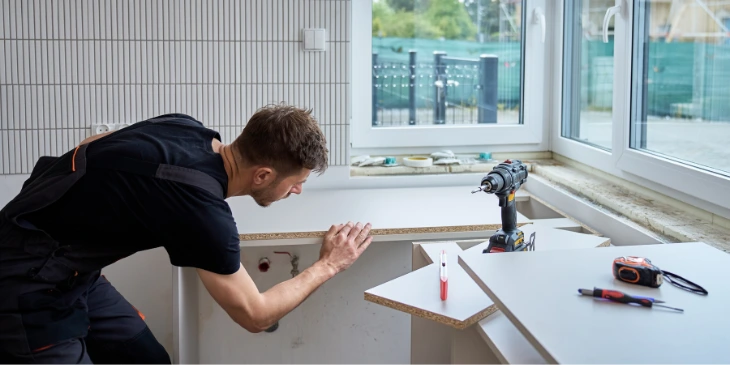
The single most useful thing you can do before your installers arrive is clear the space completely. That means removing everything you can from the work area and any rooms or hallways that the team will need to move through.
Start with the obvious: furniture, loose rugs, freestanding appliances, and any décor that's in the way. Then work through the smaller stuff: ornaments, books, tools, kids' toys, anything sitting on shelves or worktops. Wall-mounted items on surfaces that are being worked on should come down too, including pictures, mirrors, and shelves. The goal is a clear, obstacle-free environment where fitters can move freely and lay out their equipment without any risk of knocking things over or causing accidental damage.
Don't forget the route from your front door to the kitchen. Corridors and hallways in many London properties are narrow, and the team will be carrying units, worktops, and tools through them throughout the day. Clearing that path is just as important as clearing the room itself.
Here's a quick pre-installation checklist to work through the day before:
Make Sure Installers Can Easily Access Your Home
Once the space itself is clear, think about how your fitters are actually going to get in and move around. This is especially relevant in the capital, where many properties have communal entrances, intercom systems, gated access, or long distances between the front door and the kitchen.
Plan to be home when your installers arrive. You'll need to let them in, show them where the kitchen is, and point out anything they need to know, like the location of your stopcock, consumer unit (fuse box), or any quirks specific to your property. A quick five-minute tour at the start of the day can save a lot of back-and-forth later.
If you live in a flat, sort out access in advance. That means checking communal door codes, lift access, and whether there are any building rules about contractors. Some London apartment buildings require advance notice for trade visits, or have specific hours during which contractors can work. It's worth a quick call to your building manager or porter to make sure everything is in order before installation day. For those in North London or West London, older mansion blocks and mansion conversions often have strict entry protocols worth confirming ahead of time.
Make sure the path from your front door to the kitchen is completely clear. If you can lay down old rugs or dust sheets along the route, even better. It protects your floors and gives fitters a cleaner surface to work from.
Protect Furniture, Floors, and Nearby Belongings
Not everything can be moved out of the way before installers arrive, and that's fine. What matters is protecting what stays behind.
For larger furniture pieces in or near the work area, cover them with dust sheets or plastic sheeting. Installation work generates a fair amount of dust and debris, particularly when old units are being removed or walls are being drilled. Anything left uncovered risks getting scratched, dusty, or marked.
Floors deserve particular attention. Lay down dust sheets or protective coverings over carpets and hard floors along the entire route your installers will be walking, from the front door through to the kitchen. Good tradespeople are generally careful, but heavy units and tools moving across unprotected flooring can cause damage, even with the best intentions.
It's also worth clearing access to your electrical panels and consumer unit before your fitters arrive. If your consumer unit is tucked behind furniture or in a cluttered cupboard, clear it out. The same goes for your stopcock if any plumbing work is involved. Your fitters may need to access these quickly, and hunting for them mid-job wastes everyone's time.
Reputable installers will always take care of your home. A professional team brings dust sheets of their own and works tidily, but your own preparation adds an extra layer of protection that's always worth having.
Check Parking, Power, and Water Access in Advance
Parking is something London homeowners often overlook, and it can cause real problems on installation day. Installers arrive in vans, often more than one, and they'll be unloading heavy units, worktops, and tools. If they can't park nearby, that process becomes significantly harder and slower.
If you have a driveway, clear it the evening before. If you're on a street with resident permit parking or a controlled parking zone, which covers a huge proportion of the city, look into getting a contractor's parking permit in advance. Most London boroughs offer these through their council websites, and many require a few days' notice. It's a small bit of admin that saves a lot of frustration on the day.
Also think about power and water. Most kitchen installation work requires access to electricity for tools, lighting, and testing appliances, so make sure your installer knows where your sockets and consumer unit are. If any plumbing is involved, know where your stopcock is so water can be turned off quickly when needed. Here's a quick summary of the utility access points to sort out beforehand:
Also move anything near indoor units and vents that fitters may need to access during the installation. The more you can sort in advance, the less time gets eaten up on the day itself.
Keep Children and Pets Safely Away from the Work Area
Installation work is noisy and disruptive. There'll be drilling, sawing, heavy units being moved, and the team walking back and forth throughout the day. That environment isn't safe for children or animals, and it's worth making firm arrangements to keep both well away from the work zone.
For pets, the best approach is to keep them in a separate room with the door closed, or arrange for them to stay elsewhere for the day with a friend, at a dog walker's, or in a cattery if needed. Even calm pets can be stressed by the noise and activity, and an open front door (as fitters move materials in and out) creates a real risk of them slipping outside.
For children, try to arrange for them to be out of the house on installation day, whether that's at school, with another family member, or with a childcare provider. If children are at home, keep them well away from the kitchen and any hallways the team is using. Falling tools, sharp materials, and heavy units are a genuine hazard in an active work zone.
This isn't about being overly cautious. It's just practical. Keeping children and pets out of the way lets your fitters concentrate fully on the job, which means fewer mistakes and a faster finish.
Final Thoughts on Preparing Your Home for Installers to Arrive
Getting your home ready for kitchen installers doesn't take long, but it makes a real difference to how the day goes. Clear the space, protect what stays, sort out parking and access, and make sure children and pets are safely out of the way. Those steps alone set the team up to do their best work from the moment they arrive.
If you're not sure exactly what to move or cover, just ask. A quick call or message to your kitchen fitting team before installation day can clear up any uncertainty and they'll tell you precisely what they need and what to expect.
If you're still in the planning stages, the team at London Kitchen Fitting is happy to help. The fitters work across all areas of the city, from North and South to East and West London, handling everything from design through to fitting. You can find out more about us or get in touch to talk through your project.
Preparing Your Home for Installers to Arrive FAQs
What should I move before installers arrive?
Move everything you can from the kitchen and any rooms or hallways the fitters will pass through. That includes furniture, freestanding appliances, rugs, wall art, ornaments, tools, and any clutter in corridors. The aim is to give your installers a completely clear run from the front door to the work area. If something is too heavy to move, cover it with a dust sheet instead.
Do I need to cover my furniture before installation work?
It depends on the job, but covering furniture near the work area is always a good idea. Installation work generates dust and debris, and anything left uncovered risks getting marked or scratched. Use plastic sheeting or old dust sheets for larger pieces. Some installers bring their own protective coverings, but it's worth protecting your own belongings as well rather than leaving it to chance.
Should I stay home while installers are working?
It's a good idea to be there at the start. You'll need to let the team in, show them around the property, and point out key things like the location of your stopcock and consumer unit. After that, it's up to you. Most professional installers appreciate space to work, but they'll keep you in the loop if anything needs your input. If you do need to leave, just make sure the team has a way to reach you.
Do installers need parking?
Yes, almost always. Installers arrive with vans loaded with units, worktops, and tools, so nearby parking is important. Clear your driveway if you have one. If you're in a permit zone, which covers most of London, it's worth arranging a contractor parking permit through your local council a few days before the job. It's a simple step that prevents unnecessary delays.
Should pets be kept away from installers?
Absolutely. Pets should be kept in a closed room or arranged to be elsewhere for the day. The noise and activity of a kitchen installation can be stressful for animals, and an open front door throughout the day creates a real risk of them getting out. Even if your pet is calm and friendly, keeping them away from the work zone is safer for them and less distracting for your fitters.
How should I prepare if I live in a flat?
Sort out access well in advance. Check communal door codes, confirm lift access for large units and worktops, and speak to your building manager or porter about any contractor rules or required notice periods. If your building has resident parking, arrange a visitor or contractor space. Also confirm whether there's a shared stopcock at building level, rather than one inside your flat.
Do I need to provide power or water?
Your installers will need access to electricity throughout the day for tools and lighting, so make sure accessible plug sockets are available near the work area. If plumbing is involved, know where your stopcock is before they arrive. Let your installer know the location of your consumer unit too, in case the electrics need to be briefly isolated during the installation. Being prepared with this information avoids any hold-ups mid-job.
What is the most important thing to do before installers arrive?
Clear the work area and the route to it. Everything else, covering furniture, sorting parking, arranging access, supports that main goal. When fitters arrive to a clear, accessible space, they can start the actual kitchen fitting straight away. That's better for the schedule, better for your home, and better for the end result.