Is Toe-kick Lighting Right for Your London Kitchen?
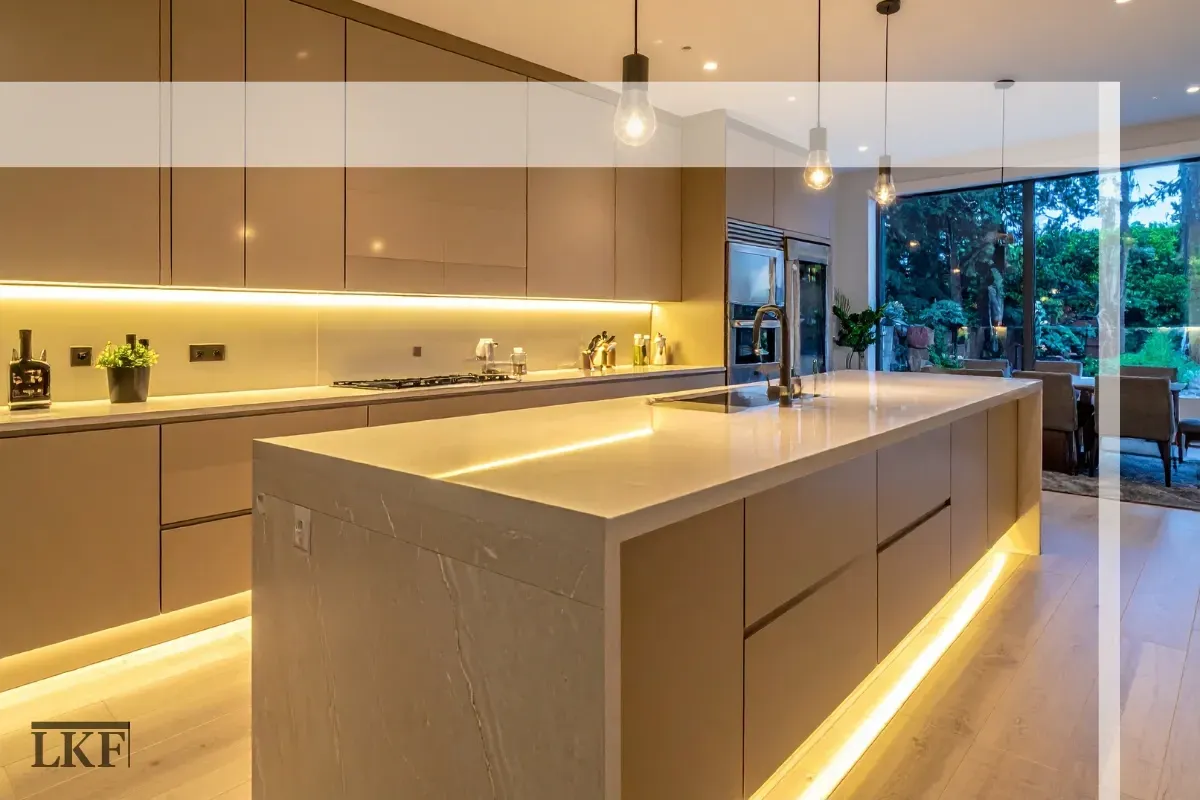
A soft glow at floor level might seem like a small detail, but it's one of those touches that quietly changes the feel of a whole kitchen. Toe-kick lighting sits just above the floor beneath your base units, casting a low, warm light that makes the space feel bigger, safer, and more considered. It's practical, it's stylish, and for most London kitchens, it's far more achievable than people think.
Quick take: Toe-kick lighting uses slim LED strips fitted into the recessed plinth beneath kitchen cabinets. It doubles as a night-light, adds a floating-cabinet effect, and costs anywhere from £20–£150 for the materials alone, or £150–£800 supplied and fitted in London. It works in almost any kitchen fitting project, from a simple refresh to a full redesign.
Table of Contents
What Are the Benefits of Toe-kick Lighting in a Kitchen?
Is Toe-kick Lighting Practical or Just Decorative?
Best Places to Install Toe-kick Lighting
Types of Toe-kick Lighting for Fitted Kitchens
How Toe-kick Lighting Is Installed
What Is Toe-kick Lighting?
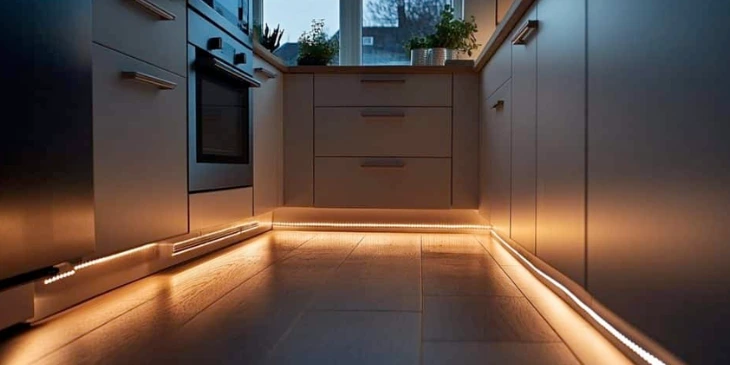
The "toe kick" is the recessed panel at the base of your kitchen units: the bit your feet slide under when you're standing at the worktop. It's usually around 100mm tall and set back slightly from the cabinet face. Toe-kick lighting simply places a slim LED strip inside that space, pointing downward onto the floor.
The result is a soft, continuous line of light that runs along the base of your cabinetry. It doesn't glare, it doesn't dominate, and it doesn't compete with your overhead lighting. It just adds depth. Most people encounter it in high-end showrooms and hotel lobbies and wonder how to get the same effect at home. The good news: it's not complicated or expensive to achieve in a fitted kitchen.
In the UK, this feature is often sold under the names "kitchen plinth lights" or "kickboard lighting," so don't be surprised if your supplier uses those terms instead.
What Are the Benefits of Toe-kick Lighting in a Kitchen?
There's more going on here than aesthetics alone. Toe-kick lighting earns its place on practical grounds too.
Safety at night. A soft LED glow at floor level acts as a natural guide through the kitchen after dark. You don't need to flick on bright overhead lights just to get a glass of water. The floor is already lit enough to see what you're doing. This is especially useful if you have young children, older relatives, or a dog whose water bowl has claimed more than a few victims in the dark.
Better ambience for evenings. Harsh ceiling lights can make an evening kitchen feel clinical. Toe-kick LEDs add a layer of indirect light that softens the room, making it feel more relaxed for cooking, entertaining, or just sitting at the island with a drink.
The floating cabinet effect. One of the most popular reasons London homeowners add plinth lighting to a fitted kitchen is the visual lift it gives the cabinetry. The light creates the illusion that the units are hovering slightly off the floor. It's a clean, modern look that works particularly well with handleless kitchens and high-gloss finishes.
It makes smaller kitchens feel larger. Many London homes have compact kitchens where space is at a premium. Drawing the eye downward with a low-level accent light adds visual depth and layers, which makes a tight room feel less closed-in.
Energy efficiency. LED strips use very little power. A typical toe-kick run across a kitchen might draw just a few watts, meaning the running costs are negligible. LEDs also last tens of thousands of hours, so once they're in, you can largely forget about them.
Is Toe-kick Lighting Practical or Just Decorative?
Both. That's genuinely the honest answer here.
It often gets filed under "nice to have," but homeowners who live with it tend to describe it as something they didn't know they needed. The safety benefits are real. Soft floor illumination at night reduces trips and helps you navigate without disturbing anyone else in the house. That's useful, not just decorative.
At the same time, the design contribution is hard to ignore. The floating effect, the depth it adds to the room, the way it shifts the mood from "kitchen" to "kitchen you actually want to spend time in." That's the aesthetic side doing its work.
If you're planning a new kitchen in north London, south London, or anywhere in between, toe-kick lighting is one of the lower-cost additions that punches well above its weight on both counts.
Best Places to Install Toe-kick Lighting
The base of your kitchen units is the obvious starting point, but it's not the only option.
Under base units and islands. Running LEDs along the toe kick of your main cabinet run is the most common approach. If you have a kitchen island, lighting its plinth separately creates a centrepiece effect that looks genuinely impressive in the evening. It's a detail that works just as well in a Howdens kitchen as it does in a bespoke design.
Bathroom vanities. The same principle applies under bathroom cabinet units. A gentle glow at floor level works as a night-light and gives a calm, considered feel to the space.
Hallways and staircases. LED strips along skirting boards or stair risers guide movement through the home at night. It's especially worth considering if you have stairs leading down to a kitchen or utility room.
Under floating shelves and furniture. TV units, bookcases, and floating shelves can all benefit from the same treatment. The lighting creates the same floating illusion and highlights whatever's on display.
For best results, mount the strip lights 50–100mm off the floor, ideally inside an aluminium channel to keep the finish neat and angle the light output correctly.
Types of Toe-kick Lighting for Fitted Kitchens
Not all LED strips are the same. Here's a breakdown of the main options for a fitted kitchen:
For most London kitchen projects, LED tape in an aluminium channel is the go-to. It's clean, flexible, and widely available from UK suppliers at reasonable prices. Colour temperature matters too: warm white (2700–3000K) tends to suit kitchens well, complementing wood tones and painted cabinetry without feeling cold.
If you're fitting a Wren kitchen, IKEA kitchen, or B&Q kitchen, many plinth lighting kits are designed to integrate with standard unit heights. It's worth asking your fitter about this at the planning stage.
How Toe-kick Lighting Is Installed
The installation process is straightforward when planned properly. Here's how it typically goes in a fitted kitchen:
1. Measure and plan the run. Work out the total length of cabinetry to be lit, accounting for any breaks around appliances, corners, or doors. Longer runs may be split into segments.
2. Fix the aluminium channel. Most installers mount the LED strip inside a slim aluminium profile, which is screwed or clipped into the toe-kick space. The profile keeps the strip in place, protects it, and angles the light downward onto the floor.
3. Fit the LED strip. Peel-and-stick LED tape goes inside the channel. If you're going around corners or connecting separate runs, push-fit connectors or soldered joins keep the circuit intact.
4. Wire to the driver. Toe-kick LEDs run on low voltage (12V or 24V DC). The transformer that converts mains power to low voltage is typically tucked into a nearby cupboard or void, out of sight. Low-voltage cable runs from the strip back to this driver.
5. Use the right IP rating. Because these lights sit close to the floor in a kitchen environment, IP65-rated strips are recommended. The silicone coating protects against spills and dust, particularly important near sinks and dishwashers.
6. Connect to mains power. This is the step that needs care. In the UK, any fixed lighting circuit in a kitchen must comply with Building Regulations Part P. Some plug-and-play kits can connect to an existing switched outlet, but if you're hardwiring the driver, a qualified electrician must carry out that final connection. It's not something to cut corners on.
A good kitchen fitter will plan the lighting run from the start of the project rather than retrofit it later. The result is cleaner cable management and a better finish overall.
Pricing of Toe Kick Lighting
Cost varies depending on the type of product, the length of the run, and whether you're supplying only or having it installed.
To put this in plain terms: for most London kitchens, a well-specified toe-kick lighting job supplied and fitted will land somewhere between £250 and £500. London electrician rates (typically £45–£60 per hour according to Checkatrade) push costs toward the upper end of national averages, so it's worth factoring that in when budgeting.
The figures above are market-backed estimates built from current UK retailer and installer pricing. They're a reliable guide, though your actual quote will depend on the specifics of your kitchen.
If you're planning a new kitchen and want to discuss lighting as part of the project, get in touch and we'll talk it through.
Final Thoughts on Toe-kick Lighting
Toe-kick lighting is one of those additions that earns its keep on multiple levels. It's not a luxury reserved for high-end showroom kitchens. It's an achievable, practical upgrade that works in everyday London homes, whether you're fitting a new kitchen from scratch or adding a finishing touch to an existing one.
The floor-level glow improves safety after dark, adds depth and character to the room, and gives cabinetry a modern, considered look that's hard to achieve any other way. The running costs are minimal, the installation is straightforward when done properly, and the result tends to outlast the initial impression.
If you're anywhere across east London or west London and thinking about a new kitchen, it's worth having a conversation about whether toe-kick lighting belongs in your plans. More often than not, the answer is yes.
Toe-kick Lighting FAQs
Are toe-kick LED lights energy-efficient?
Yes. LED strips draw very little power, typically just a few watts per metre, which means the running cost is negligible even if the lights are on every evening. LEDs also last for tens of thousands of hours, so they're a genuinely long-term solution.
Can I install toe-kick lights myself, or do I need an electrician?
You can mount the LED strip and channel yourself, but the electrical connection to mains power must be handled by a qualified electrician. In the UK, any fixed kitchen lighting is subject to Building Regulations Part P. Plug-and-play transformer kits reduce the complexity, but if the driver needs hardwiring, get a professional to do it.
What colour temperature works best for toe-kick lighting?
Warm white, around 2700–3000K, is the most popular choice for kitchens. It produces a soft, relaxed glow that complements wood tones, painted finishes, and most worktop materials without feeling harsh or clinical.
Is toe-kick lighting worth the cost?
For most homeowners, yes. It's a relatively modest addition to a kitchen fitting project that delivers a noticeable improvement in both how the kitchen looks and how it functions at night. The low energy use means it pays back over time, and the design impact is well above what the price might suggest.
Does toe-kick lighting work in small London kitchens?
It actually works particularly well in compact spaces. The low-level light draws the eye downward and adds visual depth, which makes a tight kitchen feel less closed-in. It's one of the more effective tricks for making a smaller room feel more considered and spacious.
